

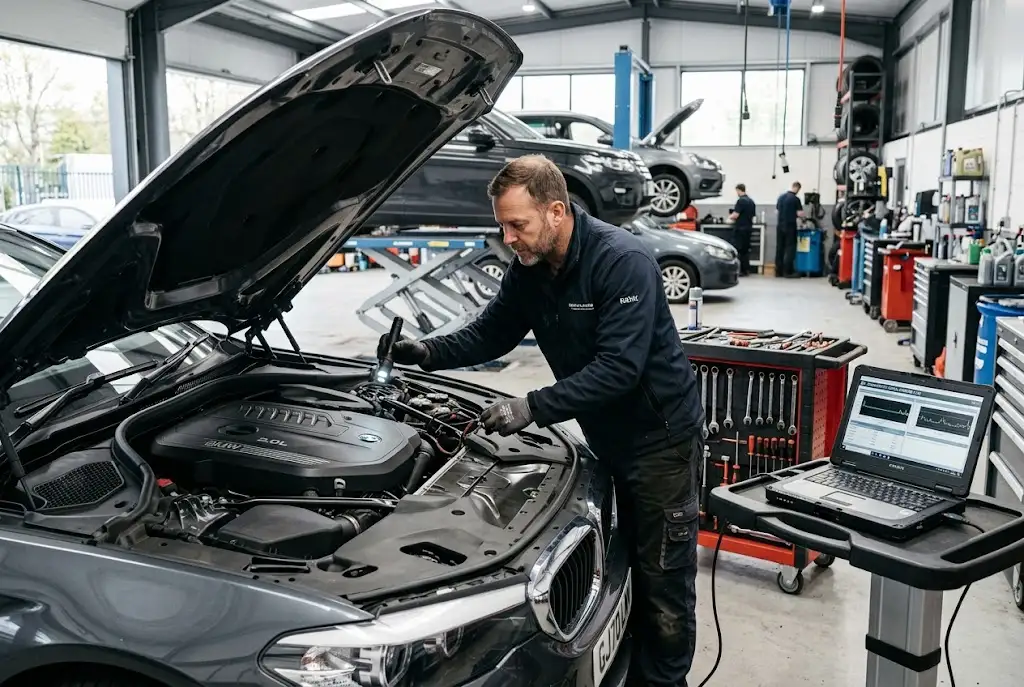
Vehicle maintenance is one of the most important parts of responsible car ownership. Regular checks and planned maintenance help drivers identify worn components, keep essential systems working correctly and understand when professional servicing or repairs may be required.
Maintenance is not limited to taking a car to a garage. It also includes simple checks that drivers can carry out between service appointments, such as monitoring tyre condition, checking lights and paying attention to warning signs. A consistent maintenance routine can make vehicle ownership easier to manage while supporting road safety and reliability.
What Is Vehicle Maintenance?
Vehicle maintenance is the ongoing process of inspecting, servicing, adjusting and replacing vehicle components when required. It includes both preventative maintenance and scheduled work recommended by the vehicle manufacturer.
Some maintenance tasks are relatively simple. Checking tyre pressures, topping up appropriate fluids and inspecting lights can form part of routine ownership. Other work, such as brake inspections, diagnostic testing, filter replacement or suspension repairs, generally requires appropriate equipment and technical expertise.
The exact requirements vary between vehicles. Engine type, mileage, age, manufacturer recommendations and driving conditions can all affect a vehicle’s maintenance needs.
For a broader overview of professional maintenance and repair businesses, see our auto services facts and statistics.
Why Vehicle Maintenance Matters
A modern vehicle contains numerous systems that must work together correctly. Brakes, tyres, steering, suspension, lights, electrical systems and the engine or electric powertrain all have different maintenance requirements.
Regular maintenance provides opportunities to identify problems before they become more serious. For example, a worn tyre can be identified during an inspection rather than after it develops a more significant problem. Similarly, unusual noises, fluid leaks or dashboard warnings can provide early indications that a vehicle needs professional attention.
Maintenance also differs from an MOT. An MOT checks whether a vehicle meets defined legal standards at the time of testing. It does not replace routine servicing or the driver’s responsibility to keep the vehicle in a roadworthy condition.
GOV.UK advises motorists that a vehicle can be unsafe even when it has a current MOT certificate and recommends following the vehicle handbook for checks and servicing information.
Vehicle Maintenance Schedules Explained
A maintenance schedule provides a framework for deciding when particular checks and servicing tasks should be completed. Manufacturers normally specify maintenance requirements using time, mileage or a combination of both.
For example, a vehicle may have maintenance requirements based on a particular number of miles or a specified period since the previous service. Some modern vehicles can calculate service requirements electronically and display reminders to the driver.
There is no universal maintenance schedule that applies to every car. Two vehicles with similar ages may have very different requirements because they use different engines, transmissions, components and manufacturer specifications.
For this reason, the vehicle handbook or manufacturer’s official servicing information should be treated as the starting point for maintenance planning.
Preventive Vehicle Maintenance
Preventive maintenance focuses on identifying and addressing potential problems before they develop into significant failures. It is one of the simplest ways drivers can take a proactive approach to vehicle ownership.
Preventive maintenance may include routine inspections of:
- Tyres and tyre pressures.
- Brake condition and performance.
- Engine oil and other relevant fluids.
- Lights and indicators.
- Windscreen, wipers and washers.
- Battery condition and electrical systems.
- Steering and suspension components.
- Warning lights and dashboard messages.
Not every check needs to be performed at the same frequency. Some items should be monitored more regularly, while others form part of scheduled professional servicing.
Vehicle Maintenance Checklist for UK Drivers
A practical maintenance checklist can help motorists remember basic checks between professional service appointments. The following areas are particularly useful to monitor.
Check the Tyres
Tyres are a critical safety component because they provide the contact between the vehicle and the road. Drivers should check tyre pressures against the vehicle manufacturer’s recommended figures and look for visible damage or unusual wear.
Uneven wear can sometimes indicate an issue with alignment, suspension or another component. A tyre that repeatedly loses pressure should also be investigated rather than simply inflated whenever necessary.
Monitor Fluid Levels
Vehicles use various fluids to support different systems. Depending on the vehicle, these can include engine oil, coolant, brake fluid and screenwash.
Drivers should use the vehicle handbook for instructions on checking fluid levels and selecting the correct products. If a fluid level repeatedly drops, there may be an underlying leak or mechanical problem that requires professional inspection.
Inspect Lights
Headlights, brake lights, indicators, rear lights and other required lighting equipment should be kept in working order. A failed bulb may be straightforward to replace, but recurring electrical problems may require diagnostic work.
Pay Attention to Warning Signs
Dashboard warning lights should never be ignored simply because the vehicle continues to drive normally. The meaning and urgency of a warning can vary, so drivers should consult the vehicle handbook and seek appropriate professional advice when necessary.
Vehicle Maintenance and Service Intervals
Service intervals are closely connected to maintenance schedules. A scheduled service provides an opportunity for a trained technician to inspect systems and complete manufacturer-specified maintenance tasks.
Service requirements can include oil and filter changes, inspections and replacement of components at specified intervals. Some maintenance items may only be required periodically rather than at every service.
Drivers should therefore avoid assuming that every service package is identical. Before booking, it is sensible to establish what work is included and compare it with the manufacturer’s requirements.
Our car servicing guide explains the differences between interim, full and major services and looks more closely at servicing timelines.
Maintenance Records and Vehicle History
Keeping accurate maintenance records can be valuable throughout a vehicle’s ownership. Records can show when servicing was completed, what parts were replaced and whether particular issues have been investigated.
A well-organised record might include service invoices, repair receipts, inspection details and mileage information. Digital records can be useful too, provided the information is accurate and can be retrieved when required.
Maintenance records may also become relevant when selling a vehicle. A documented history gives prospective buyers more information about how the car has been maintained and can help distinguish documented work from unsupported claims.
Vehicle Maintenance for Older Cars
The age of a vehicle can influence its maintenance requirements. As components accumulate mileage and operating time, wear-related issues may become more relevant.
However, vehicle age alone does not determine whether a car is reliable. Maintenance history, mileage, driving conditions, previous repairs and the quality of replacement parts can all influence its condition.
For older vehicles, keeping detailed records can be particularly helpful. They can show when major maintenance work was completed and help technicians understand the vehicle’s history when diagnosing new issues.
Regular inspections can also help owners make informed decisions about whether to repair, maintain or eventually replace a vehicle.
Vehicle Maintenance and the MOT
MOT testing and vehicle maintenance have different purposes. Most cars in Great Britain require their first MOT when they are three years old and then need an annual test once they reach that age threshold.
An MOT assesses specific aspects of vehicle safety and environmental performance. A service is broader and is intended to maintain the vehicle according to its maintenance requirements.
A car can therefore pass its MOT while still being due for servicing or requiring attention to components that are not assessed in the same way during the test.
Drivers should also remember that passing an MOT is not a guarantee that a vehicle will remain roadworthy for the following year. Condition can change between tests, which is why regular checks remain important.
For a detailed comparison, see our MOT and service guide.
How Driving Habits Affect Maintenance
The way a vehicle is used can influence maintenance requirements. Frequent short journeys, heavy traffic, long-distance driving, towing and driving on poor road surfaces can place different demands on vehicle systems.
Short journeys, for instance, may mean an engine spends more time operating before reaching normal conditions. Heavy urban traffic can involve repeated braking and acceleration, while long-distance driving can increase mileage quickly.
These factors do not automatically mean a vehicle needs a different service schedule. Instead, they are useful context when discussing maintenance requirements with a qualified technician and checking manufacturer guidance.
Common Vehicle Maintenance Mistakes
Many maintenance problems are linked to simple oversights rather than complicated mechanical failures. One common mistake is waiting for a noticeable fault before checking the vehicle.
Another is assuming that an MOT replaces servicing. It does not. A further mistake is relying on generic online maintenance intervals instead of checking the specific requirements for the vehicle.
Drivers should also avoid approving unnecessary work without understanding why it has been recommended. A reputable garage should be able to explain the issue, the proposed repair and any relevant urgency.
Vehicle Maintenance for Hybrid and Electric Cars
Vehicle technology is changing, and maintenance practices are changing with it. Hybrid and battery-electric vehicles do not require exactly the same maintenance as conventional petrol and diesel cars.
Some traditional maintenance requirements can be different because electric powertrains have fewer conventional engine components. However, tyres, brakes, steering, suspension, lighting, cooling systems and other vehicle components still require attention.
Electric vehicles also introduce high-voltage systems that require appropriate training and safety procedures. Drivers should therefore use a suitably qualified service provider for work that involves systems outside normal owner maintenance.
The growth of electrified vehicles is also contributing to changes in the wider automotive aftermarket, with workshops investing in equipment, training and technical capabilities.
When to Seek Professional Vehicle Maintenance
Drivers should arrange professional inspection when a vehicle develops symptoms that cannot be safely or confidently assessed at home. These can include unusual noises, steering changes, brake problems, persistent warning lights, fluid leaks, vibrations or significant changes in performance.
Professional maintenance is also appropriate for scheduled service work, component replacement and diagnostic investigations that require specialist tools or technical knowledge.
Prompt attention can make it easier to determine the cause of a problem and establish whether immediate repair, routine maintenance or continued monitoring is appropriate.
Vehicle Maintenance Facts Drivers Should Remember
Several principles provide a useful foundation for maintaining almost any vehicle:
- Always check the manufacturer’s maintenance recommendations.
- Do not treat an MOT as a replacement for servicing.
- Monitor tyres, lights and relevant fluid levels regularly.
- Take unusual noises, warning lights and changes in handling seriously.
- Keep service and repair records organised.
- Use appropriately qualified professionals for complex repairs.
- Check the vehicle before long journeys.
- Understand which maintenance tasks can safely be performed by the owner.
These habits are simple, but they can help motorists develop a more consistent approach to vehicle care.
The Future of Vehicle Maintenance
Vehicle maintenance will continue to evolve as the UK’s vehicle fleet becomes older, more electrified and more technologically advanced. Diagnostic systems are becoming increasingly important, while technicians need to understand electronic systems alongside traditional mechanical components.
Connected vehicles may also make maintenance more data-driven. Service reminders, diagnostic information and electronic vehicle systems can provide additional information about condition and maintenance requirements.
At the same time, the fundamental principles remain the same. Vehicles require appropriate inspections, maintenance and repairs throughout their useful lives, regardless of whether they use petrol, diesel, hybrid or battery-electric technology.
Final Thoughts on Vehicle Maintenance
Vehicle maintenance is not a single event but an ongoing part of responsible car ownership. Following manufacturer recommendations, carrying out sensible routine checks and keeping accurate records can help drivers understand their vehicle’s condition and maintenance needs.
Preventive maintenance can also make ownership more predictable by providing opportunities to identify worn or developing components before they cause greater disruption. Meanwhile, professional servicing and repair remain essential when work requires specialist knowledge or equipment.
As vehicles continue to change, motorists will need to adapt their maintenance habits too. Yet the core principle remains straightforward: understand the vehicle, follow its maintenance schedule, respond to warning signs and keep reliable records.
For the next topic in this Auto Services cluster, explore our auto repair services statistics and facts to learn more about repair frequency, workshop trends and the wider vehicle repair industry.
For official guidance on keeping a vehicle safe and understanding the driver’s responsibilities, consult the GOV.UK vehicle safety guidance.
