MOT and service are two important but different parts of vehicle ownership in the UK. An MOT test checks whether a vehicle meets specific road safety and environmental standards at the time of testing, while servicing involves planned maintenance intended to keep the vehicle operating properly.
Understanding the difference matters because a valid MOT certificate does not mean a vehicle is fully maintained. Likewise, completing a service does not replace the legal requirement for an MOT when one is due. Looking at MOT statistics, testing requirements and servicing practices together gives motorists a clearer picture of responsible vehicle care.
What Is an MOT and Service?
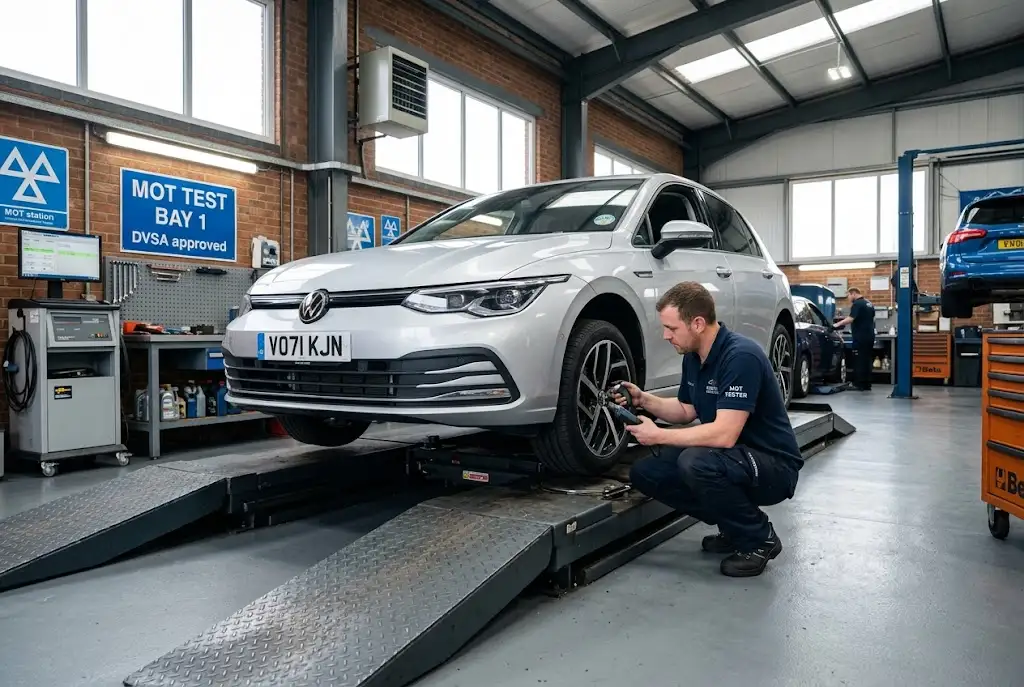
An MOT is a legally required test for most vehicles once they reach the relevant age threshold. The test examines specified safety and environmental requirements and records whether the vehicle passes or fails.
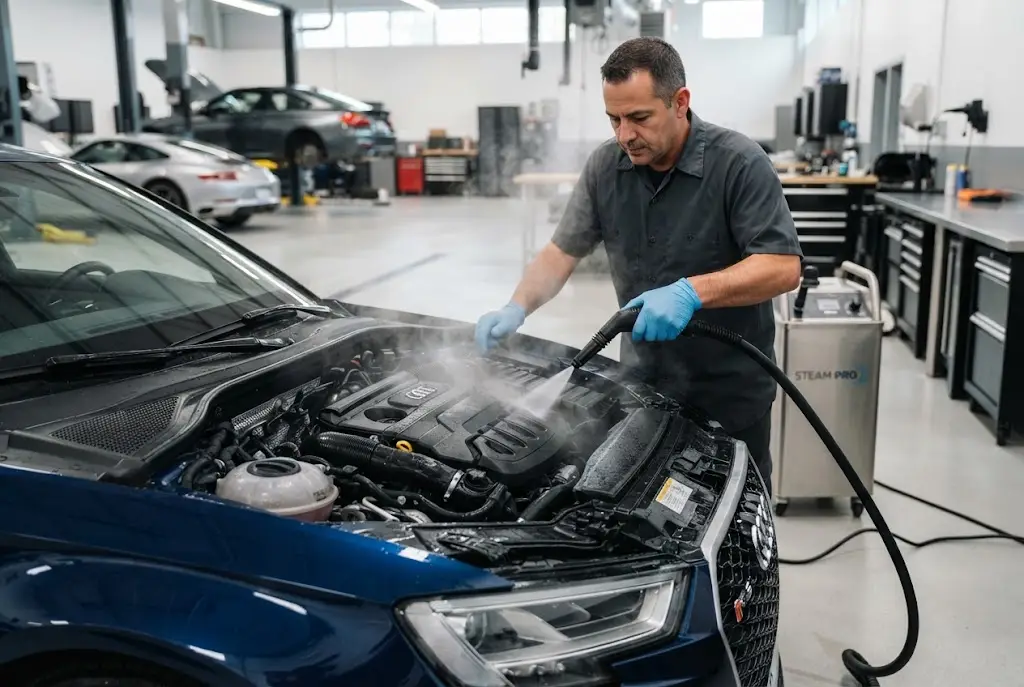
A service is different. It is a planned maintenance procedure that can include inspections, fluid and filter checks, replacement of service items and other work recommended by the vehicle manufacturer.
The two processes can take place around the same time, but they should not be treated as interchangeable. A vehicle may pass an MOT and still be due for a service, while a serviced vehicle can still fail an MOT because it has a defect that does not meet the testing standard.
For broader information about the maintenance side of vehicle ownership, see our vehicle maintenance facts guide.
MOT and Service: What Is the Difference?
The simplest way to understand the distinction is to consider their primary purpose.
- MOT: A regulated test assessing whether a vehicle meets defined safety and environmental standards at the time of testing.
- Service: Planned maintenance designed to inspect and maintain the vehicle according to its servicing requirements.
- Repair: Corrective work carried out when a vehicle has a fault, damaged component or worn part requiring attention.
This distinction is important because an MOT is not a general mechanical health check. The Driver and Vehicle Standards Agency explains that its MOT dataset covers test results by vehicle class, failures by defect category and information about MOT testing stations and testers.
The official MOT data is updated quarterly, allowing testing patterns and failure rates to be tracked over time.
When Does a Car Need an MOT?
Most cars in Great Britain need their first MOT when they are three years old. After that, an MOT is generally required every year.
The exact requirements can differ for particular vehicle types, so motorists should check the official GOV.UK guidance for their vehicle rather than relying on a general assumption.
The MOT date is separate from the service date. A car might have a service in one month and an MOT several months later, depending on the manufacturer’s service schedule and the vehicle’s MOT expiry date.
Drivers can check their MOT status and history through the official government service before arranging testing.
MOT Statistics: What the UK Data Shows
Official DVSA data provides a useful snapshot of MOT testing activity across Great Britain. The published dataset separates vehicles into different MOT classes and records initial and final failure rates.
For 2024–25, the dataset recorded more than 35.2 million initial MOT tests across all listed vehicle classes. The overall initial failure rate was 27.90%.
For cars, vans and passenger vehicles with up to 12 seats covered by classes 3 and 4, the 2024–25 data recorded an initial failure rate of 28.08% across more than 33.1 million tests.
In the first quarter of 2025–26, the overall initial failure rate across the listed classes was 26.80%. For class 5 private passenger vehicles with more than 12 seats, the initial failure rate was 27.24% during the same quarter.
These figures need to be interpreted carefully. An initial failure does not necessarily mean a vehicle required major mechanical repair. The MOT system records defined test defects, and a vehicle may pass after a defect is rectified at the testing station.
Understanding MOT Pass Rates
MOT statistics can include both initial and final failure rates, and the distinction is important.
The initial fail rate measures vehicles as they were presented for the MOT. The final fail rate excludes vehicles that pass after minor defects are rectified at the test station.
For 2024–25, the overall initial failure rate across the listed MOT classes was 27.90%, compared with a final failure rate of 22.44%.
For class 3 and 4 vehicles, which include cars and light vans up to 3,000kg, the initial failure rate was 28.08%, while the final failure rate was 22.67%.
This difference illustrates why motorists should look carefully at how MOT statistics are defined before using them to compare testing outcomes.
Common MOT Inspection Areas
The MOT test covers a range of vehicle systems and components. Official DVSA data groups initial failures into defect categories, providing useful insight into areas where problems are identified.
For cars and light vehicles, categories include:
- Lamps and electrical equipment.
- Suspension.
- Brakes.
- Tyres and wheels.
- Visibility.
- Steering.
- Body and vehicle structure.
- Exhaust and emissions-related requirements.
A failed MOT can involve more than one defect. DVSA notes that a failed test usually has multiple failure items, which means individual defect percentages should not simply be treated as percentages of all vehicles.
MOT and Service: Why a Service Still Matters
A common mistake is assuming that passing an MOT means the car does not need additional maintenance. In reality, the MOT only assesses specific requirements included in the test.
Routine servicing can cover areas outside the scope of the MOT and can follow the manufacturer’s maintenance schedule. Depending on the vehicle, servicing may involve oil and filter changes, inspection of fluids, checks of brakes and tyres, filter replacement and other manufacturer-specified maintenance tasks.
Servicing can also help identify developing problems before they become more disruptive. However, it is not a guarantee that a vehicle will never experience an unexpected fault.
Our detailed car servicing guide explains interim, full and major services, along with service intervals and maintenance timelines.
Can a Car Pass an MOT but Still Need Repairs?
Yes. A vehicle can pass its MOT and still require maintenance or repair work.
The MOT assesses defined legal standards at a particular point in time. It does not certify that every component of a vehicle is in perfect condition or that the car will remain fault-free until its next test.
For example, a component may be functioning adequately at the time of the test but later develop a fault. Other maintenance requirements may also fall outside the specific MOT inspection criteria.
This is why motorists should continue monitoring their vehicles after an MOT and should not ignore warning lights, unusual noises, changes in handling, fluid leaks or other symptoms.
MOT Defects and Vehicle Maintenance
MOT failure data can highlight areas where maintenance deserves attention. Tyres, brakes, lights, suspension and visibility-related components are among the areas represented in official defect categories.
However, drivers should not wait for an MOT failure before checking these components. Regular maintenance and basic owner checks can help identify obvious issues earlier.
For example, drivers can monitor tyre pressures and visible tyre condition, check that lights are functioning and pay attention to changes in braking performance. More complex issues should be assessed by an appropriately qualified professional.
Our vehicle maintenance guide provides a wider checklist for preventative vehicle care.
MOT and Service Timing
Many motorists choose to arrange an MOT and service around the same time because it can make vehicle maintenance easier to organise. However, there is no requirement that both must occur together.
The best schedule depends on the vehicle’s individual service requirements and MOT due date. A manufacturer may recommend servicing at a particular mileage or time interval, while the MOT follows the legal testing schedule.
Some drivers may benefit from arranging a service before an MOT so that obvious maintenance issues can be identified beforehand. Others may prefer to keep the appointments separate.
Either approach can work as long as both the service schedule and MOT deadline are properly managed.
What Happens if a Vehicle Fails Its MOT?
If a vehicle fails its MOT, the test record identifies the relevant defects. The required response depends on the nature of the failure and whether the vehicle is safe and legal to drive.
Some defects can be repaired at the testing station, while others require additional work. Once the relevant issues have been addressed, the vehicle may need a retest under the applicable rules.
Drivers should read the MOT result carefully and understand which defects caused the failure. A reputable repairer should be able to explain the required work and provide an appropriate estimate before repairs are authorised.
Our auto repair services guide covers repair trends, diagnostics and common areas of professional vehicle repair.
How to Prepare for an MOT
There is no way to guarantee an MOT pass, but drivers can carry out sensible checks before the appointment.
- Check that all exterior lights work correctly.
- Inspect tyres for visible damage and suitable tread.
- Check windscreen wipers and washers.
- Make sure the horn operates correctly.
- Check that registration plates are clean and readable.
- Pay attention to dashboard warning lights.
- Make sure the vehicle is reasonably clean, particularly around important components.
- Arrange professional repairs if a known safety-related problem exists.
These checks do not replace the MOT test, but they can help identify obvious issues before the vehicle reaches the testing station.
MOT Regulations and Driver Responsibilities
Vehicle owners have responsibilities that extend beyond obtaining an MOT certificate. The vehicle must remain roadworthy while it is being used on public roads.
GOV.UK advises drivers to check their vehicles regularly and states that a vehicle can be unsafe even if it has a current MOT certificate.
This is particularly important because vehicle condition can change between annual tests. Tyres can wear, bulbs can fail, brake components can deteriorate and warning systems can identify new faults.
An MOT should therefore be viewed as one part of a wider approach to vehicle safety rather than a once-a-year replacement for regular maintenance.
MOT and Service for Older Vehicles
Older vehicles can require particular attention because components may have accumulated more mileage and operating time. However, age alone does not determine whether a car will pass an MOT or require extensive repairs.
Maintenance history, mileage, driving conditions and the vehicle’s actual condition all matter. A well-maintained older vehicle can remain dependable, while a poorly maintained newer vehicle can develop problems.
Keeping accurate service and repair records can be especially useful for older cars. Documentation can show when important maintenance tasks were completed and provide useful information when new problems are diagnosed.
MOT and Service for Modern Vehicles
Modern cars introduce another consideration: increasing technical complexity. Electronic control systems, sensors, driver-assistance technology and electrified powertrains are becoming more common.
This can affect servicing and repair requirements even though the fundamental MOT framework continues to focus on defined testing standards.
Hybrid and electric vehicles may have different maintenance requirements from conventional petrol and diesel cars. Some traditional engine-related tasks may be reduced, while electrical systems, battery-related components and specialised diagnostic procedures can become more important.
Work involving high-voltage systems should be handled by appropriately trained professionals.
Why MOT Statistics Are Useful
MOT statistics provide more than individual pass and fail results. They offer a broad view of vehicle condition across Great Britain and help identify patterns in testing and defect categories.
Because the DVSA dataset is updated quarterly, it can also provide an ongoing view of testing trends. However, users should always check the period, vehicle class and definition of the statistic before drawing conclusions.
For example, an initial fail rate should not automatically be described as the percentage of vehicles requiring major repairs. The statistic measures failure at the initial MOT stage and can include vehicles whose defects are subsequently rectified.
Simple MOT and Service Checklist
Keeping the two processes organised can be straightforward. Drivers can use a simple checklist throughout the year:
- Know the vehicle’s MOT expiry date.
- Check the manufacturer’s recommended service interval.
- Keep service and repair records.
- Monitor tyres, lights and fluid levels.
- Respond to dashboard warning lights.
- Investigate unusual noises or changes in handling.
- Use a qualified repair provider for complex work.
- Do not assume an MOT certificate replaces regular maintenance.
This approach helps separate legal testing requirements from everyday vehicle care while ensuring that neither is overlooked.
The Future of MOT and Service
The UK’s vehicle fleet is changing, and both testing and servicing will continue to adapt. Electric and hybrid vehicles are becoming more common, while conventional vehicles remain an important part of the national fleet.
Modern vehicles also depend increasingly on electronic systems and advanced diagnostics. This means the automotive aftermarket needs technicians with a wider combination of mechanical, electrical and diagnostic skills.
For motorists, the underlying principle remains straightforward: follow the manufacturer’s maintenance recommendations, meet the vehicle’s MOT requirements and respond promptly to problems that develop between tests.
Final Thoughts on MOT and Service
MOT and service requirements work together but serve different purposes. An MOT is a regulated test that assesses specific safety and environmental standards, while servicing focuses on planned vehicle maintenance.
Official DVSA figures show that MOT testing remains a major part of vehicle ownership in Great Britain, with millions of tests recorded each year. The data also demonstrates why understanding failure rates and defect categories can be useful when considering vehicle condition.
For motorists, the most important lesson is not to rely on the MOT alone. Regular checks, scheduled servicing, accurate records and timely repairs all contribute to responsible vehicle ownership.
As vehicles become more technologically advanced, professional servicing and repair will continue to evolve. Yet the basic principle remains unchanged: keep the vehicle maintained, understand its testing obligations and deal with developing problems before they become more serious.
For a wider look at the repair side of the automotive sector, explore our auto repair services facts and trends and our wider auto services statistics coverage.
For the latest official MOT testing information, including results by vehicle class and defect categories, consult the GOV.UK MOT testing data.