

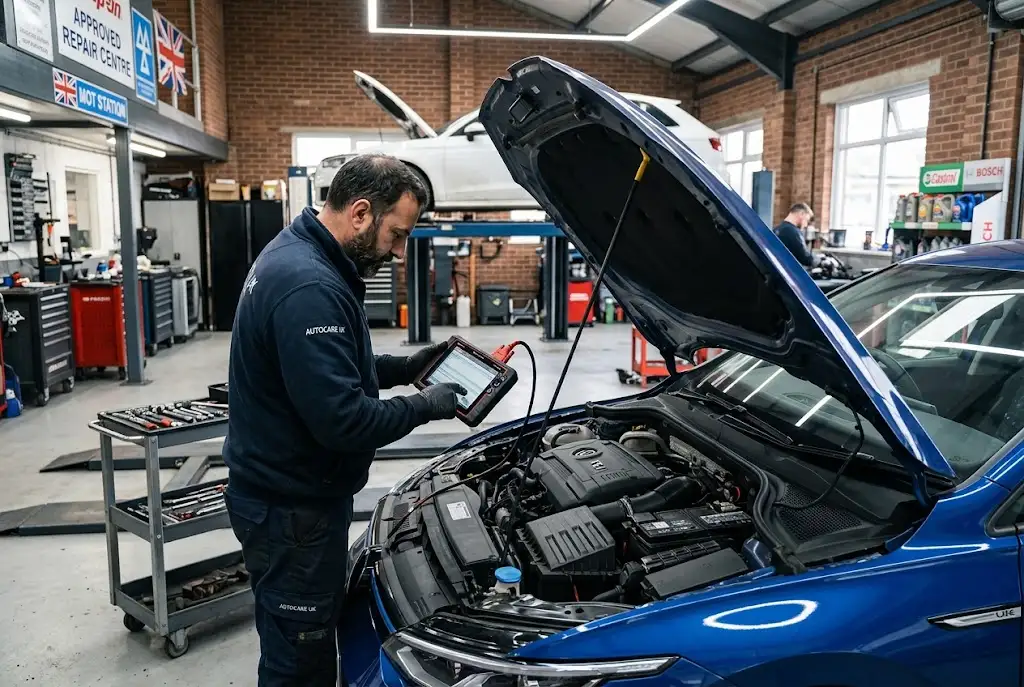
Auto repair services play an essential role in keeping the UK’s vehicle fleet safe, functional and on the road. While routine servicing focuses on planned maintenance, repairs address faults, damaged components and parts that have reached the end of their useful life.
The need for professional vehicle repairs is influenced by many factors, including vehicle age, mileage, driving conditions, maintenance history and the growing complexity of modern cars. Understanding repair industry trends and common problem areas can help motorists make more informed decisions when a vehicle needs attention.
What Are Auto Repair Services?
Auto repair services cover professional work carried out to diagnose and correct faults in vehicles. This can include mechanical repairs, electrical diagnostics, brake work, suspension repairs, steering components, exhaust systems, engine-related faults and other vehicle systems.
Some repairs are relatively straightforward, while others require specialist diagnostic equipment and technical expertise. Modern vehicles rely heavily on electronic control systems, sensors and computerised components, so diagnosing a fault may be just as important as replacing the failed component.
Repairs can also arise from normal wear and tear. Brake components, tyres, batteries and suspension parts, for example, can require replacement as vehicles accumulate mileage.
For the broader context surrounding the UK automotive aftermarket, see our auto services facts and statistics guide.
Why Auto Repair Services Matter
Vehicles are exposed to continuous mechanical and environmental demands. Braking, acceleration, road surfaces, weather, mileage and everyday use can gradually affect components.
Professional repairs become particularly important when a vehicle develops symptoms that could affect safety or reliability. Problems involving brakes, steering, suspension, tyres or electrical warning systems should not simply be ignored because the vehicle remains driveable.
GOV.UK places responsibility on drivers to ensure that their vehicles are roadworthy. Its vehicle safety guidance also makes clear that having a current MOT certificate does not guarantee that a vehicle remains safe between tests.
This is one reason repair work and routine maintenance should be viewed as ongoing parts of vehicle ownership rather than activities that only happen when an MOT is due.
Common Vehicle Repair Areas
Repair requirements vary considerably from one vehicle to another. However, several systems regularly form part of professional workshop activity.
Brakes
Braking systems are among the most important safety systems on a vehicle. Components such as brake pads, discs and other parts can wear over time and may eventually require inspection or replacement.
Changes in braking performance, unusual noises or warning indicators should be investigated rather than ignored.
Suspension
Suspension components help maintain vehicle stability, handling and ride quality. Wear can develop gradually, particularly as a vehicle accumulates mileage or regularly travels over poor road surfaces.
Problems may sometimes become apparent through unusual noises, uneven tyre wear, changes in handling or excessive movement over bumps.
Electrical and Diagnostic Systems
Modern vehicles contain numerous sensors and electronic control systems. A warning light can therefore have several possible causes, and professional diagnostics may be required to identify the underlying fault.
Diagnostic equipment can help technicians interpret fault information and narrow down the systems requiring further inspection.
Tyres
Tyres experience continuous contact with the road and naturally wear as they are used. Uneven wear, visible damage, low pressure or insufficient tread can indicate that a tyre needs attention.
Because tyres influence braking, steering and grip, their condition should be monitored regularly.
Auto Repair Services and UK MOT Data
MOT statistics provide useful information about vehicle defects identified during testing, although MOT results should not be treated as a direct measurement of repair frequency.
For cars and light vehicles in the relevant MOT class, official testing data records defects across categories including lamps and electrical equipment, suspension, brakes, tyres and visibility.
During the 2024–25 financial year, the initial failure rate for the relevant car and light-vehicle MOT class was 28.08%. In the first quarter of 2025–26, the initial failure rate was 27.24%.
These figures illustrate how frequently vehicles can be identified as having defects during an MOT. They do not mean that the same percentage of vehicles require major mechanical repairs. MOT testing examines defined requirements, whereas the repair industry deals with a much broader range of mechanical and electrical problems.
Our MOT and service guide explains the difference between MOT testing, servicing and ongoing vehicle maintenance.
Auto Repair Services and Vehicle Age
Vehicle age is an important factor when considering the repair market. The UK’s car parc includes a substantial number of older vehicles, and SMMT reported that the average car on UK roads was 9.7 years old in 2025.
SMMT also reported that 45.7% of the car parc was more than 10 years old. An ageing fleet creates an ongoing requirement for inspections, replacement components and corrective repairs as vehicles remain in service.
Older vehicles do not necessarily require constant repairs. Maintenance history and actual condition remain more useful indicators than age alone. Nevertheless, a vehicle that has accumulated many years and miles may eventually require work on components that were not replaced earlier in its lifecycle.
This is why repair services form an important part of maintaining vehicles beyond their initial ownership period.
Repair Frequency and Preventive Maintenance
Repair frequency differs from one vehicle owner to another. A well-maintained car may experience relatively few unexpected problems, while another vehicle may require more frequent intervention because of age, mileage, usage or previous maintenance issues.
Preventive maintenance can help reduce the likelihood of avoidable problems by identifying wear before a component fails completely. Regular inspections can also reveal issues that are easier to address when they are still developing.
However, preventative maintenance cannot eliminate every repair. Components can fail unexpectedly, accidents can cause damage and electronic faults can arise without obvious warning.
Our vehicle maintenance guide covers maintenance schedules, preventive checks and maintenance records in more detail.
How Auto Repair Workshops Diagnose Problems
Professional repair normally begins with diagnosis. A technician may start by discussing the symptoms with the vehicle owner before carrying out visual inspections, road tests or diagnostic scans where appropriate.
The process can vary depending on the fault. A simple issue may be visible immediately, while an intermittent electrical fault may require more detailed testing.
Accurate diagnosis matters because replacing parts without identifying the underlying problem can result in unnecessary expense without solving the original fault.
A good repair process therefore involves identifying the problem, determining the appropriate repair and explaining the recommended work to the customer.
Auto Repair Costs and What Affects Them
Repair prices vary significantly, so there is no single average cost that applies to all auto repair services. Several factors can influence the final bill.
- The vehicle’s make, model and specification.
- The type and severity of the fault.
- The parts required for the repair.
- Labour time and diagnostic requirements.
- Whether additional faults are discovered during inspection.
- Whether the repair involves specialist equipment or expertise.
Parts prices can also differ depending on whether original-equipment, manufacturer-approved or other suitable replacement components are used. Drivers should ask the repairer to explain what parts are being proposed and whether the quoted price includes labour, diagnostics and applicable taxes.
It is also sensible to obtain approval before additional work is undertaken if the repair could exceed the original estimate.
Choosing an Auto Repair Provider
Choosing a repairer should involve more than comparing the cheapest advertised price. The quality of diagnosis, communication and workmanship can all affect the overall experience.
Before authorising work, motorists can ask:
- What fault has been identified?
- What repair is being recommended?
- Is the repair urgent?
- What parts will be used?
- What is included in the estimate?
- Will additional work require approval?
- What documentation will be provided after the repair?
Keeping the invoice and repair documentation can help maintain an accurate vehicle history. It can also be useful if a recurring fault needs to be investigated later.
Auto Repair Services for Older Vehicles
Older vehicles can present different repair considerations from newer cars. Some components may have accumulated substantial wear, while replacement parts can vary in availability depending on the vehicle’s age and specification.
Owners should consider the vehicle’s overall condition when deciding whether to proceed with a major repair. A single expensive repair does not necessarily mean a vehicle is no longer economical to maintain, particularly if other major components are in good condition.
Conversely, several significant faults occurring together may make replacement a more practical option. The decision ultimately depends on the vehicle’s value, condition, expected future maintenance and the owner’s circumstances.
How Vehicle Technology Is Changing Repairs
The modern repair industry is becoming increasingly technical. Cars now contain sophisticated electronic systems, advanced driver-assistance features and, increasingly, hybrid or battery-electric powertrains.
As a result, technicians may need specialist training and diagnostic equipment in addition to traditional mechanical skills.
SMMT reported in 2025 that 81.2% of surveyed UK automotive aftermarket workshops had invested in training, talent and tooling to service electric vehicles and newer vehicle technologies. This illustrates how workshops are adapting to changes in the vehicles entering the repair market.
Electric and hybrid vehicles can require different diagnostic and safety procedures from conventional vehicles. High-voltage systems, for example, require appropriately trained personnel and suitable workshop procedures.
Auto Repair Trends in the UK
Several trends are shaping the UK’s vehicle repair sector.
An Ageing Vehicle Fleet
The growing average age of vehicles creates continued demand for repairs and replacement components. As owners keep cars for longer, workshops remain important for maintaining vehicles throughout extended ownership periods.
Electrification
The increasing number of hybrid and battery-electric vehicles is changing the type of expertise required by repair businesses. Traditional mechanical skills remain relevant, but electrical and high-voltage knowledge is becoming increasingly important.
Advanced Diagnostics
Electronic systems mean that repair diagnosis increasingly involves software and digital tools. Workshops need appropriate equipment to identify faults accurately rather than relying exclusively on conventional mechanical inspection.
Customer Expectations
Drivers increasingly expect clear estimates, explanations and documentation. Transparent communication can help customers understand why a repair is recommended and what work is actually necessary.
Auto Repair Services vs Car Servicing
Although servicing and repairs overlap, they have different primary purposes.
Car servicing is planned maintenance carried out at appropriate intervals. It can include inspections, fluid and filter changes and manufacturer-specified maintenance tasks.
Auto repair services focus on correcting identified faults, damage or component failures. A repair may be discovered during routine servicing, an MOT inspection or through a problem reported by the driver.
The two therefore work together. Routine servicing can identify developing issues, while professional repair addresses problems that require corrective work.
When Should a Driver Seek a Repair?
Drivers should seek professional advice when a vehicle develops symptoms that may affect safety, reliability or normal operation. These can include brake problems, steering changes, persistent warning lights, unusual engine noises, fluid leaks, significant vibrations or sudden changes in performance.
Problems should also be investigated if they repeatedly return after apparently successful maintenance.
Waiting for a minor problem to become severe can sometimes increase the complexity of the eventual repair. Prompt diagnosis provides a better opportunity to understand the issue and decide what action is appropriate.
Simple Ways to Reduce Avoidable Repairs
No driver can prevent every mechanical failure, but good maintenance habits can help reduce avoidable problems.
- Follow the manufacturer’s maintenance schedule.
- Check tyre pressures and condition regularly.
- Pay attention to dashboard warning lights.
- Do not ignore unusual noises or changes in handling.
- Keep fluid levels within the recommended range.
- Maintain accurate service and repair records.
- Arrange professional inspections when a problem appears.
- Use qualified professionals for complex mechanical or electrical work.
These measures are not a guarantee against breakdowns, but they provide a sensible foundation for responsible vehicle ownership.
The Future of Auto Repair Services
The UK repair industry will continue to evolve as the vehicle parc changes. Electric vehicles, hybrid systems, connected technology and increasingly advanced electronic components will influence the equipment and expertise required by workshops.
At the same time, conventional petrol and diesel vehicles will remain an important part of the UK’s fleet for years to come. Their continued use means traditional mechanical repair skills will remain relevant alongside newer electrical and diagnostic capabilities.
The result is likely to be a more technically diverse repair industry in which technicians need to work across mechanical, electronic and software-related systems.
Final Thoughts on Auto Repair Services
Auto repair services are a fundamental part of keeping vehicles operational throughout their ownership lifecycle. Repairs can range from routine component replacement to complex diagnostic work, and the type of work required depends heavily on the vehicle’s condition and technology.
The UK’s ageing vehicle fleet, changing technology and growing number of electrified vehicles are all influencing repair industry trends. For motorists, the most useful approach is to follow scheduled maintenance, pay attention to warning signs and seek professional diagnosis when problems appear.
Understanding the difference between servicing, MOT testing and repairs also makes vehicle ownership easier to manage. An MOT is not a substitute for maintenance, while a service is not designed to resolve every unexpected fault.
By combining regular maintenance with timely repairs and accurate records, drivers can make more informed decisions about the condition and future of their vehicles.
For the final topic in this Auto Services cluster, explore our MOT and service facts and figures to understand UK testing trends, inspection requirements and the relationship between MOTs and vehicle servicing.
For official information about keeping vehicles roadworthy, motorists can consult the GOV.UK vehicle safety guidance.
