

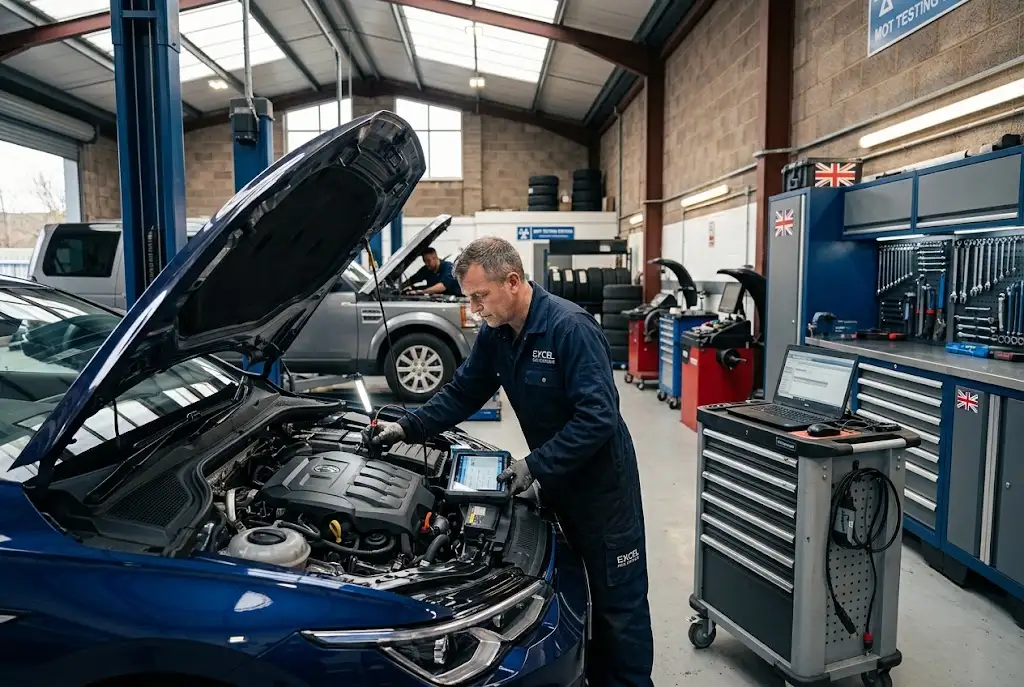
Car servicing is an important part of responsible vehicle ownership in the UK. While an MOT checks whether a vehicle meets specific safety and environmental standards at the time of testing, servicing is broader and focuses on planned maintenance that helps keep a car operating properly.
Understanding service types, maintenance intervals and service timelines can make it easier to look after a vehicle and recognise when professional attention is needed. From an interim service for higher-mileage drivers to a more comprehensive major service, the right approach depends on the vehicle, its age, mileage, manufacturer recommendations and how it is used.
What Is Car Servicing?
Car servicing is planned maintenance carried out to assess a vehicle’s condition and replace, inspect or adjust components according to the manufacturer’s servicing requirements. The exact work varies between vehicles, so there is no single checklist that applies equally to every car.
A typical service may include checks of fluids, filters, brakes, tyres, lights, steering and other important components. Depending on the vehicle and service level, technicians may also carry out oil and filter replacement, diagnostic checks and inspections of parts that are subject to wear.
The purpose is not simply to fix an existing fault. Regular servicing can help identify developing issues and provides an opportunity to keep maintenance work aligned with the manufacturer’s recommended schedule.
For a wider look at the professional automotive sector, see our auto services facts and statistics guide.
Why Car Servicing Matters
Regular maintenance matters because a vehicle is made up of numerous mechanical, electrical and electronic systems that work together. Fluids deteriorate, filters become contaminated and components such as tyres, brakes and suspension parts can wear over time.
Ignoring routine servicing does not necessarily cause an immediate breakdown. However, postponing recommended maintenance can make it harder to identify developing problems early. In some circumstances, a relatively small maintenance issue can eventually contribute to a more expensive repair.
There is also an important safety consideration. GOV.UK states that drivers are responsible for ensuring their vehicles remain roadworthy and notes that a vehicle can be unsafe even when it has a current MOT certificate. The government’s guidance also advises drivers to follow their vehicle handbook for information about checks and servicing.
Car Servicing Types Explained
Garages and manufacturers may use different names for service packages, but three terms are commonly encountered: interim service, full service and major service. The precise contents can vary, so drivers should always check what is included before booking.
Interim Service
An interim service is generally intended for vehicles that are driven frequently or cover relatively high annual mileage. It provides a more focused set of maintenance checks between more comprehensive services.
Depending on the vehicle and garage, an interim service can include engine oil and filter replacement alongside inspections of key components and fluid levels. The exact specification should be confirmed against the manufacturer’s requirements.
Drivers who cover significant mileage may benefit from understanding where an interim service fits into their wider maintenance schedule rather than treating it as a substitute for every major service.
Full Car Service
A full car service normally involves a broader range of inspections and maintenance than an interim service. It can include checks of brakes, tyres, steering, suspension, fluids, lights and other systems, with replacement of specified service items where required.
The contents of a full service are not universal. Different manufacturers establish different servicing requirements, and garages may offer packages with different inspection lists. Therefore, comparing the actual service checklist is more useful than relying solely on the name of the package.
Major Service
A major service is typically the most comprehensive scheduled service offered by a garage. It may involve additional filters, components and checks that are not required at every routine service.
Some vehicles have specific time- or mileage-based replacement requirements for components such as timing belts. These requirements vary considerably by manufacturer and engine, which is why the vehicle handbook and manufacturer service schedule should be used as the primary reference.
Understanding Car Service Intervals
Car service intervals are determined by factors such as the vehicle’s manufacturer, engine, age, mileage and usage conditions. Some manufacturers specify both a mileage limit and a time period, meaning a service may be due when either threshold is reached.
For example, a driver who covers relatively few miles may still need to follow an annual servicing schedule if the manufacturer specifies one. Conversely, someone who drives substantial distances may reach a mileage-based interval sooner.
Short journeys, heavy traffic, frequent towing and other demanding driving conditions can also influence maintenance requirements. However, motorists should not invent their own service interval simply because they believe their driving is particularly demanding. The manufacturer’s recommendations remain the appropriate starting point.
Car Servicing and Maintenance Timelines
Maintaining a clear service timeline makes vehicle ownership easier to manage. A basic record should show when servicing was completed, the vehicle’s mileage and the work that was carried out.
Service records can also help when diagnosing future problems. If a technician knows when oil, filters, brakes or other components were last inspected or replaced, they have more useful information when assessing the vehicle.
Keeping documentation can be particularly useful when selling a car. A well-maintained service history gives a potential buyer a clearer picture of the vehicle’s maintenance background, although records should always be genuine and accurately reflect work completed.
Our vehicle maintenance guide covers maintenance schedules, preventative checks and the role of maintenance records in greater detail.
What Happens During a Car Service?
The exact process depends on the service level and vehicle, but a professional service commonly involves a systematic inspection rather than a single task.
- Checking and, where specified, replacing engine oil and filters.
- Inspecting fluid levels and looking for signs of leaks.
- Checking tyres for condition, pressure and visible damage.
- Inspecting braking components for wear or other issues.
- Checking lights, wipers and washers.
- Inspecting steering and suspension components.
- Checking relevant warning lights and vehicle systems.
- Carrying out additional manufacturer-specified checks.
Not every item will be replaced during every service. Servicing is primarily about following the appropriate maintenance schedule and identifying work that is actually required.
Car Servicing vs MOT Testing
One of the most common misconceptions among motorists is that a valid MOT means a car does not need servicing. The two processes have different purposes.
An MOT assesses whether a vehicle meets defined road safety and environmental standards. In Great Britain, most cars require their first MOT by the third anniversary of registration and then annually once they are more than three years old.
Servicing is planned maintenance intended to help keep the vehicle in good operating condition. A car can therefore have a valid MOT while still being due for a service.
GOV.UK specifically advises that a vehicle can be unsafe even if it has a current MOT certificate. The Highway Code also highlights the importance of maintaining components such as lights, brakes, steering, exhaust systems, seat belts, wipers and washers.
For this reason, motorists should treat servicing and MOT testing as complementary rather than interchangeable.
How Often Should a Car Be Serviced?
There is no universal servicing interval for every UK car. The correct schedule should come from the vehicle’s handbook or manufacturer’s servicing information.
Some vehicles use fixed intervals, while others have servicing systems that calculate maintenance requirements based on factors such as mileage and driving conditions. Modern cars may also display service reminders on the dashboard.
Rather than waiting for a noticeable problem, drivers should check their maintenance schedule in advance. This is particularly important before long journeys, when a vehicle may be exposed to significantly more mileage than usual.
Signs Your Car May Need Attention
Scheduled servicing is important, but motorists should not wait for the next service if a vehicle develops an obvious problem. New warning lights, unusual noises, changes in braking behaviour, steering problems, fluid leaks or unusual vibrations can all justify professional assessment.
Similarly, a sudden change in fuel consumption or vehicle performance may warrant investigation. Not every change indicates a serious fault, but early diagnosis can help establish whether further work is necessary.
Drivers should also perform basic checks themselves. GOV.UK recommends checking items such as lights, brakes, tyres and relevant fluid levels, while the vehicle handbook provides manufacturer-specific guidance.
Choosing a Car Servicing Provider
When selecting a garage, motorists should look beyond the headline service price. A low advertised price may cover a limited package, while another provider may include a wider range of checks and manufacturer-specified maintenance.
Before booking, ask what the service includes, whether replacement parts are included in the quoted price and whether additional repairs require approval before work begins.
It is also useful to retain invoices and service documentation after each visit. These records create a useful maintenance history and make it easier to track future service requirements.
The Motor Ombudsman Service and Repair Code promotes principles including honest and fair service, transparent pricing and completing work as agreed.
Car Servicing for Older Vehicles
Older cars can benefit from particularly careful maintenance because components accumulate wear over time. Age does not automatically mean that a vehicle is unreliable, but its maintenance requirements can differ from those of a newer car.
For an older vehicle, service records can help identify recurring issues and establish when important components were last replaced. Regular inspections can also provide an opportunity to assess whether continued maintenance remains economically sensible.
This does not mean every older car requires expensive work at every service. A good maintenance approach is based on the vehicle’s actual condition, manufacturer requirements and the work that is genuinely necessary.
How Car Servicing Is Changing
Vehicle technology is changing the servicing industry. Modern cars contain increasingly sophisticated electronic systems, driver-assistance technologies and, in many cases, hybrid or battery-electric powertrains.
This means technicians may need specialist diagnostic equipment and training alongside traditional mechanical skills. The Society of Motor Manufacturers and Traders reported in 2025 that 81.2% of surveyed UK automotive aftermarket workshops had invested in training, talent and tooling to service electric vehicles and newer vehicle technologies.
The change does not remove the need for servicing. Instead, it is expanding what professional vehicle maintenance can involve. Future service visits may increasingly combine mechanical inspections with software, electronic diagnostics and high-voltage system expertise.
Simple Car Servicing Checklist for UK Drivers
A practical approach to servicing does not need to be complicated. Drivers can start by keeping the vehicle handbook accessible and recording each service date and mileage.
- Check the manufacturer’s recommended service schedule.
- Record completed servicing and repair work.
- Check tyres, lights and fluid levels regularly.
- Do not ignore dashboard warning lights.
- Investigate unusual noises, vibrations or changes in vehicle behaviour.
- Keep MOT dates separate from servicing dates.
- Ask for a clear explanation of recommended repairs.
- Keep invoices and service documentation.
These simple habits can make it easier to stay ahead of routine maintenance and recognise when professional attention is required.
Final Thoughts on Car Servicing
Car servicing is a fundamental part of maintaining a vehicle throughout its ownership lifecycle. Interim, full and major services can serve different purposes, while the correct service interval depends on the manufacturer’s recommendations and the way a vehicle is used.
Most importantly, servicing should not be confused with an MOT. An MOT is a legal inspection against defined standards, whereas servicing provides planned maintenance and broader checks. Both have an important role in responsible vehicle ownership.
As vehicles become older, more connected and increasingly electrified, the servicing industry will continue to adapt. For UK motorists, keeping accurate records, following the appropriate maintenance schedule and addressing problems promptly remain practical ways to support safe and dependable motoring.
For the next part of this Auto Services content cluster, explore our vehicle maintenance facts to understand preventative maintenance, schedules and maintenance records in more detail.
The For official guidance on vehicle safety and servicing responsibilities, motorists can also consult the GOV.UK vehicle safety guidance.
