
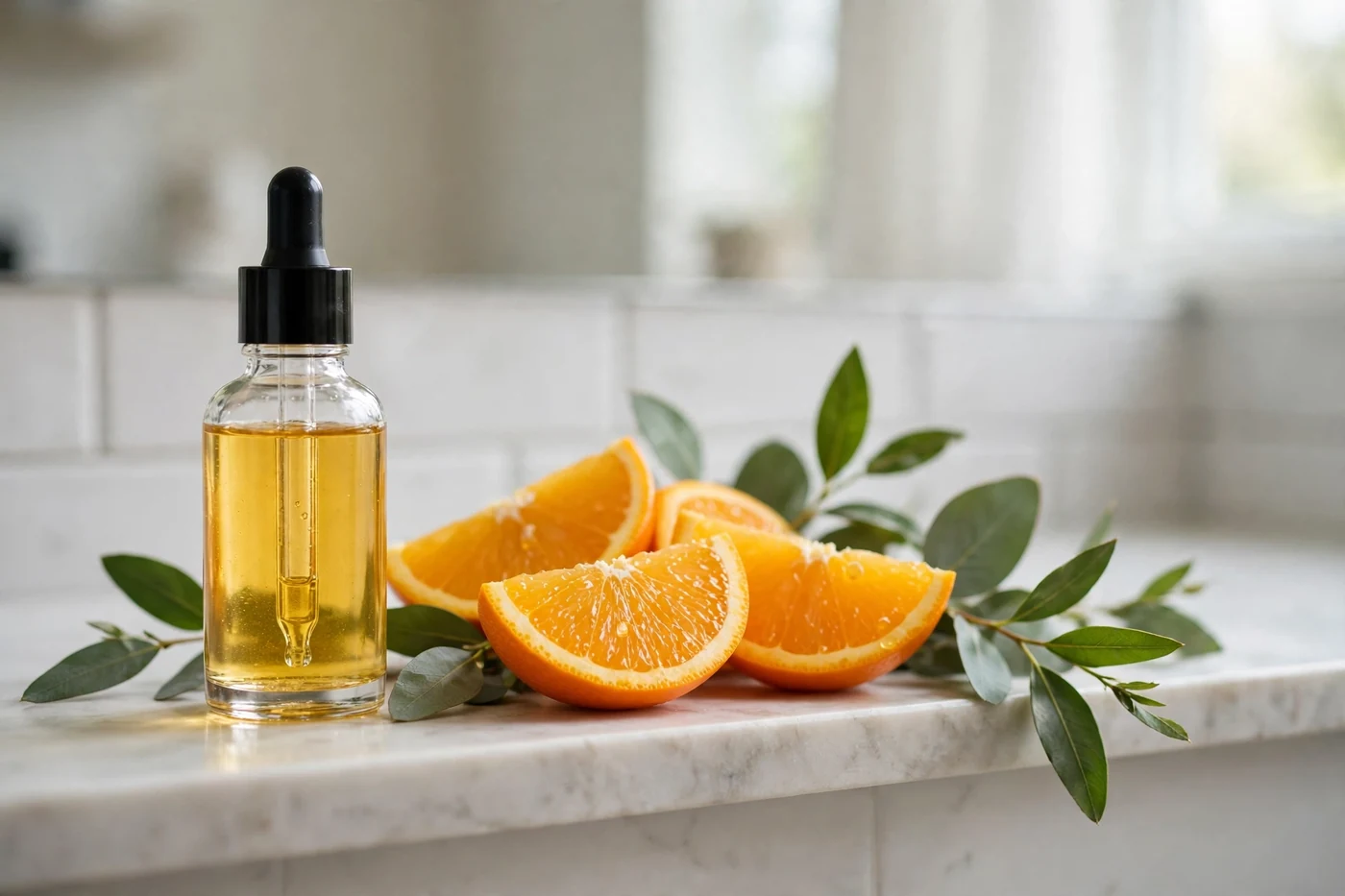
Few skincare ingredients have earned as much shelf space as the vitamin c serum. It appears in routines aimed at dullness, uneven tone and early fine lines, and it is recommended by dermatologists and beauty editors alike. But a crowded market brings mixed messages: strengths vary wildly, formulas oxidise, and some claims run far ahead of the evidence. This guide sets out the established facts about vitamin C in skincare — what it does, which form to choose, how strong a serum you actually need, and how to use it so the bottle on your shelf genuinely earns its place.
What a Vitamin C Serum Does for Your Skin
Vitamin C, listed on labels as ascorbic acid, is an antioxidant. In everyday terms, that means it helps neutralise free radicals — unstable molecules generated by sunlight and pollution that contribute to premature skin ageing. Used consistently, a vitamin c serum supports the skin in several well-documented ways. It plays a role in collagen synthesis, the process that keeps skin firm. It can help skin look brighter and more even in tone, which is why it is a common choice for tackling the appearance of dark spots and post-blemish marks. It also works alongside sunscreen: it is not a substitute for SPF, but antioxidants can support the skin’s defences under UV exposure. For the full picture on daily protection, our guide to sunscreen facts and how SPF works explains what sun protection can and cannot do.
What vitamin C will not do is transform skin overnight. Like most evidence-backed ingredients, its effects build gradually over weeks of regular use, and results vary by formula and by skin type. Treat any product promising instant results with caution.
The Different Forms of Vitamin C in Serums
Not every vitamin c serum contains the same ingredient. The most researched form is L-ascorbic acid, pure vitamin C. It is effective but demanding: it works best at a low (acidic) pH, it can tingle or irritate sensitive skin, and it degrades when exposed to light and air. Alongside it you will find gentler derivatives, including sodium ascorbyl phosphate, magnesium ascorbyl phosphate, ascorbyl glucoside and tetrahexyldecyl ascorbate. These are more stable and usually better tolerated, though the direct evidence base for them is smaller than for L-ascorbic acid itself. Neither choice is automatically better — the right form depends on your skin’s tolerance and what you want the product to do. If you enjoy comparing active ingredients, our breakdown of niacinamide facts covers another versatile ingredient that pairs comfortably with vitamin C in a routine.
Choosing a Strength Without Overdoing It
Vitamin c serum products commonly range from around 5% to 20% vitamin C. It is tempting to assume the highest number is the strongest performer, but stronger is not always better. Higher concentrations of L-ascorbic acid increase the chance of stinging, redness and flaking, particularly for beginners and for sensitive or reactive skin, without a guaranteed jump in results. A sensible approach is to start at the lower end, use the product consistently for several weeks, and only consider a stronger formula if your skin is comfortable and you want more. Consistency with a tolerable product beats an intense product you abandon after a fortnight. Packaging matters as much as percentage: look for opaque or dark glass bottles, ideally with a pump or a tightly sealing dropper, because every exposure to air shortens the serum’s useful life.
How to Use a Vitamin C Serum in Your Routine
Most people use a vitamin c serum in the morning, where its antioxidant role sits naturally under sunscreen. Apply it after cleansing, on dry skin, before moisturiser and SPF. A few drops are enough for the face; more product does not mean faster results. If you use other actives, keep the routine simple while your skin adjusts. Vitamin C is often paired with vitamin E and ferulic acid in formulas, a combination known to improve stability. It can also be used alongside niacinamide in modern formulations, despite an old myth that the two cancel each other out — that advice dates from much older research on raw ingredients, not today’s finished products. Retinol is usually kept for the evening, which conveniently separates it from a morning vitamin C step; our guide to retinol facts, strengths and myths explains how to introduce it safely. If you are building a routine with an eye on waste and cost, our practical guide to sustainable beauty has ideas for buying fewer, better products.
Mistakes That Stop a Serum Working
The most common problem is oxidation. As a vitamin c serum oxidises, it changes colour — from pale straw to yellow, then orange and eventually brown — and loses effectiveness. A slightly deeper tint in an older bottle is normal, but a dark orange serum that smells different from when you opened it should be replaced. Store the bottle away from heat and direct sunlight, and close it promptly after use. Other frequent mistakes include applying it to damp skin at high strengths (which can increase irritation), mixing it in the palm with other products rather than layering, and giving up too soon. Skin cell turnover is slow, so judge any new serum after at least several weeks of regular use, not several days.
Who Should Take Extra Care
Vitamin C is generally well tolerated, but there are sensible cautions. If you have eczema-prone, very sensitive or broken skin, start with a derivative-based serum at a low strength and patch test first — apply a small amount behind the ear or along the jawline for a few days before full use. Tingling for a few seconds after application is common with L-ascorbic acid; persistent burning, itching or a rash is a sign to stop. Anyone managing a diagnosed skin condition should check with a clinician before adding new actives, particularly during pregnancy or alongside prescription treatments. The wider market context is worth knowing too: our overview of the UK beauty industry and its trends explains why ingredient-led products like this have become so prominent.
In short, a vitamin c serum is one of the better-supported additions to a skincare routine: an antioxidant that supports collagen, brightness and even tone. Choose a form your skin tolerates, start at a modest strength, store the bottle properly and give it time. Those unglamorous habits — not the highest percentage on the label — are what make the ingredient deliver. If you are comparing your options on the shelf, read the ingredient list before the marketing claims: the form of vitamin C, where it sits in the list, and how the bottle is packaged will tell you far more about the serum inside than the promises on the front of the box.