
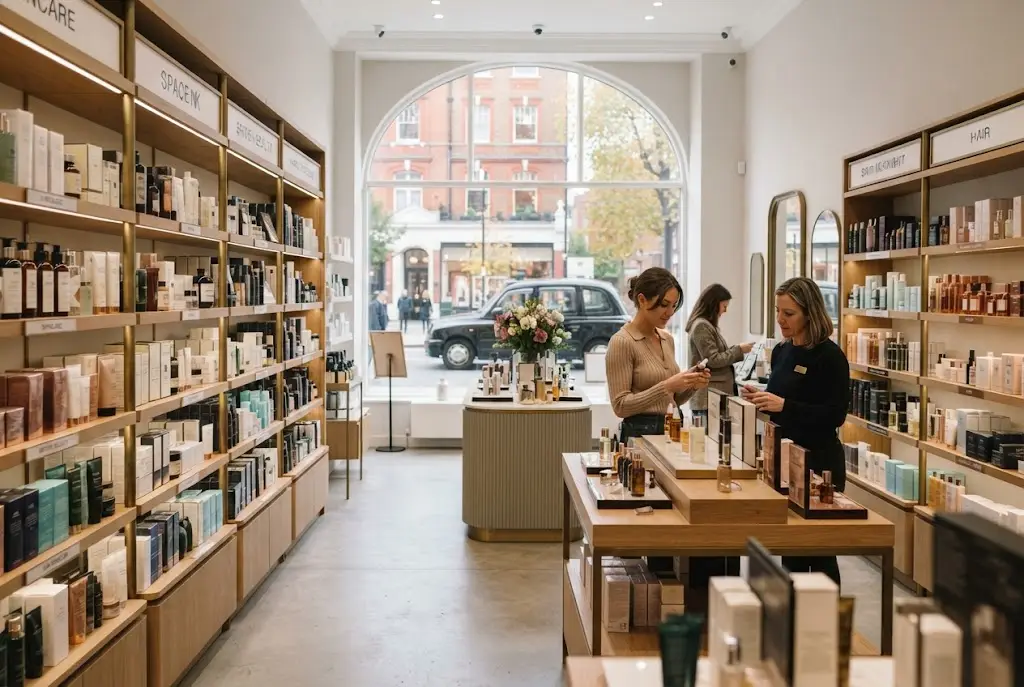
The UK beauty industry is a diverse and evolving part of the country’s consumer economy, spanning skincare, cosmetics, haircare, fragrance, professional treatments and personal care. From independent beauty businesses and specialist salons to international brands and major retailers, the sector serves consumers with increasingly varied expectations.
Understanding the UK beauty industry requires looking beyond individual products. Consumer behaviour, digital commerce, sustainability, regulation, innovation and changing ideas about beauty are all influencing the market. For businesses and readers alike, these developments provide useful context for understanding where the UK beauty market is heading.
What Is the UK Beauty Industry?
The UK beauty industry includes businesses involved in creating, manufacturing, distributing, selling and providing services related to beauty and personal care. This broad ecosystem includes cosmetic brands, skincare companies, fragrance houses, salons, spas, independent practitioners, retailers, wholesalers and online businesses.
The industry also extends into supporting services. Marketing agencies, publishers, content creators, technology providers and professional training organisations all contribute to the wider beauty economy.
Because the sector covers both products and services, its performance is influenced by a wide range of consumer needs. Someone purchasing a skincare product online is part of the same wider market as someone booking a facial, visiting a hair salon or buying fragrance from a department store.
Why the UK Beauty Industry Matters
The beauty sector has a significant economic footprint in the UK. According to research commissioned by the British Beauty Council and produced with Oxford Economics, the beauty industry directly contributed £4.6 billion to UK GDP in 2024. The research also highlights the sector’s contribution through employment, exports, tax revenues and wider economic activity.
This demonstrates why beauty should not be viewed simply as a collection of consumer products. It is a substantial commercial ecosystem that supports businesses and jobs across different parts of the country.
The sector’s diversity is particularly important. Large international companies operate alongside independent brands, local salons, freelance professionals and emerging online businesses. That combination creates a competitive market in which businesses can differentiate themselves through products, expertise, service and brand identity.
UK Beauty Market Trends Shaping Consumer Demand
The UK beauty market continues to change as consumers become more informed and purchasing habits evolve. Several trends are particularly relevant to businesses operating in the sector.
Personalisation
Consumers increasingly expect products and services to feel relevant to their individual needs. In skincare, this can mean selecting products according to skin concerns or preferences. In professional beauty, it can involve consultations and tailored treatments.
Personalisation can help businesses move away from a one-size-fits-all approach and create more useful customer experiences.
Digital Shopping
Online shopping has become an important part of beauty discovery and purchasing. Consumers can compare products, read reviews, watch demonstrations and research ingredients before making a decision.
This makes digital content particularly valuable. A beauty business with clear product information and useful educational content can answer customer questions before the purchase takes place.
Sustainability
Environmental considerations are also influencing the beauty conversation. Packaging, ingredients, waste, sourcing and product life cycles are increasingly discussed by brands and consumers.
This connects closely with the wider topic of sustainable beauty and responsible beauty choices, where consumers can learn how packaging, purchasing habits and product design affect environmental impact.
The UK Cosmetics Industry and Product Innovation
The UK cosmetics industry includes a broad range of products, from makeup and skincare to haircare, fragrance and other personal care products.
Innovation can occur in many forms. Brands may develop new textures, formulations, packaging systems, application methods or product formats. Other businesses differentiate themselves through specialist positioning, such as products designed around particular consumer preferences or beauty routines.
Innovation is not limited to established companies. Smaller businesses can use direct-to-consumer models, social media and online marketplaces to introduce products to specific audiences without relying entirely on traditional retail channels.
That accessibility has increased competition, making brand identity and customer trust particularly important.
Beauty Industry Regulations UK: Why Compliance Matters
Beauty businesses operating in Great Britain need to understand the rules that apply to cosmetic products. Regulation is particularly important because consumers need confidence that products placed on the market meet applicable safety requirements.
UK Government guidance explains that cosmetic products placed on the market in Great Britain must have a Responsible Person and must be notified to the Office for Product Safety and Standards through the relevant notification process before being made available to consumers.
Businesses also need to consider requirements covering areas such as product information, safety assessments, labelling and prohibited or restricted ingredients. Requirements can differ depending on where a product is manufactured, imported or sold.
For that reason, businesses should rely on current official guidance and appropriate professional advice when dealing with compliance rather than treating regulatory information as a marketing detail.
UK Cosmetics Regulations and Consumer Trust
Regulation has another important role: building consumer confidence.
Beauty shoppers often want to know what they are buying, where it comes from and how it should be used. Accurate product information and compliant labelling can help customers make informed decisions.
This is particularly relevant to online beauty businesses. When shoppers cannot physically inspect a product before purchasing, product descriptions, ingredient information, warnings and usage instructions become even more important.
Businesses that communicate clearly can make the purchasing process easier while demonstrating that they take product responsibilities seriously.
UK Beauty Businesses: From Independent Brands to Established Companies
One of the defining characteristics of the UK beauty industry is the variety of businesses operating within it.
Independent beauty brands can compete by developing distinctive products, serving specialist audiences or creating strong communities around their identity. Salons and independent practitioners can compete through personal service, technical expertise and customer relationships.
Larger businesses benefit from established distribution networks, retail relationships, marketing resources and brand recognition. However, they also face competition from smaller companies that can often respond quickly to changing consumer interests.
This creates a market where scale is useful but does not guarantee success. Businesses still need to understand their audience and communicate a clear reason for customers to choose them.
How Digital Media Is Changing the Beauty Market
Digital platforms have transformed how consumers discover beauty products and services. Social media can introduce new products quickly, while video demonstrations can show application techniques and product textures in ways that traditional advertising cannot always replicate.
Search engines remain important because consumers frequently research specific problems before purchasing. Someone looking for skincare advice may first search for information about a particular concern, ingredient or routine and only later consider specific products.
This makes educational content a valuable part of beauty marketing. High-quality beauty writing and editorial content can answer questions while helping brands and publishers establish credibility within specific subject areas.
Beauty Industry Statistics: How to Read the Numbers
Beauty industry statistics can help businesses understand market size, employment, consumer behaviour and economic contribution. However, statistics should always be interpreted in context.
A headline figure may describe the entire beauty sector, while another statistic may cover only cosmetics, personal care or a particular retail channel. Comparing figures from different studies without checking their definitions can therefore create a misleading picture.
Businesses should consider factors such as the research period, geographic scope, product categories included and methodology used before drawing conclusions from industry data.
Reliable industry research is especially useful when planning investment, launching products or assessing market opportunities. Government sources, established industry organisations and transparent research methodologies generally provide stronger foundations than unsupported figures circulating online.
UK Beauty Market Trends and Sustainability
Sustainability is increasingly connected with product development, packaging and consumer expectations. Beauty companies are exploring different approaches to reducing waste, improving packaging efficiency and communicating environmental information.
However, sustainability claims require care. A product should not be described as environmentally beneficial simply because it uses one recyclable component or contains a plant-based ingredient.
Businesses should consider the wider product life cycle, including sourcing, manufacturing, packaging, transportation, use and disposal. Clear communication is also important because broad environmental claims can create unrealistic expectations.
For consumers, this means looking for specific information rather than relying solely on green marketing language.
The Growing Importance of Luxury Beauty
The UK market also contains a strong premium and luxury segment. Luxury skincare, cosmetics, fragrance and specialist treatments appeal to consumers who value factors such as formulation, design, heritage, service and exclusivity.
The relationship between sustainability and premium positioning is becoming increasingly interesting. Consumers may want the quality and experience associated with luxury beauty and premium products while also expecting responsible packaging and transparent business practices.
This creates an opportunity for brands to combine sophisticated product experiences with more thoughtful approaches to materials, sourcing and product longevity.
Challenges Facing the UK Beauty Industry
Despite its opportunities, the UK beauty industry faces several challenges.
Competition
The number of brands and products available to consumers can make differentiation difficult. Businesses need a clear proposition rather than relying on generic beauty messaging.
Regulatory Complexity
Businesses must understand applicable product and consumer requirements, particularly when selling across different markets. Regulatory responsibilities can become more complex for companies involved in importing or exporting cosmetics.
Consumer Expectations
Customers increasingly expect transparency, convenience and value. They may research ingredients, compare prices, read reviews and investigate a brand before purchasing.
Digital Visibility
Competition for online attention is intense. A good product can struggle to reach its intended audience without effective search visibility, useful content and a clear digital presence.
This is why beauty SEO and topical authority are becoming increasingly relevant to brands, publishers and beauty businesses competing for organic search visibility.
UK Beauty Industry Outlook
The UK beauty industry outlook remains closely connected to innovation, consumer behaviour and the ability of businesses to adapt.
Digital commerce is likely to remain an important route to market, while physical retail and professional services continue to provide valuable experiences that cannot be completely replicated online. Personalisation, sustainability and premium experiences are also likely to remain important themes across different parts of the sector.
For smaller businesses, the ability to build a focused brand and communicate directly with a specific audience can create opportunities. For established companies, maintaining relevance may require continuous innovation and a willingness to respond to changing expectations.
Content will also remain important because beauty consumers need reliable information before making decisions. Brands that educate rather than simply promote can build stronger relationships with their audiences.
How Beauty Businesses Can Prepare for the Future
Businesses operating in the UK beauty market can strengthen their position by focusing on a few fundamental areas:
- Know the target customer: Understand specific needs, preferences and purchasing behaviour rather than targeting everyone.
- Prioritise product quality: Strong products and reliable customer experiences provide the foundation for sustainable growth.
- Stay informed about regulations: Keep compliance processes and product information up to date.
- Invest in useful content: Answer genuine customer questions through educational and editorial material.
- Build digital visibility: Use search, social media and other channels that align with the audience.
- Communicate sustainability carefully: Make specific claims that can be supported by evidence.
- Monitor market trends: Use credible research and customer feedback to identify meaningful changes.
Final Thoughts on the UK Beauty Industry
The UK beauty industry is a broad and competitive sector that combines consumer products, professional services, technology, retail and media. Its continued development is being shaped by changing consumer expectations, digital commerce, sustainability, innovation and regulatory responsibilities.
For consumers, this creates greater choice but also makes reliable information increasingly valuable. For businesses, the market offers substantial opportunities for brands that understand their audience, maintain product standards and communicate clearly.
The future of the UK beauty industry will not be defined by one trend alone. Instead, businesses that successfully combine quality, trust, innovation, responsible practices and useful customer experiences will be better positioned to respond as the market continues to evolve.