Mobile auto service is becoming an increasingly visible part of the UK automotive aftermarket as drivers look for ways to reduce vehicle downtime and avoid unnecessary trips to garages. Mobile mechanics can carry out selected servicing, diagnostics and repairs at a customer’s home or workplace, offering an alternative to the traditional workshop visit.
The growth of this service model reflects several wider changes in the UK automotive market. Vehicle owners are increasingly concerned about maintenance costs, garage availability and the inconvenience of being without a car. At the same time, mobile repair businesses are developing better diagnostic capabilities and expanding the range of work they can perform away from a conventional workshop.
What Is Mobile Auto Service?
Mobile auto service refers to vehicle maintenance, diagnostics or repair work performed at a location chosen by the customer rather than requiring the vehicle to be taken into a traditional garage.
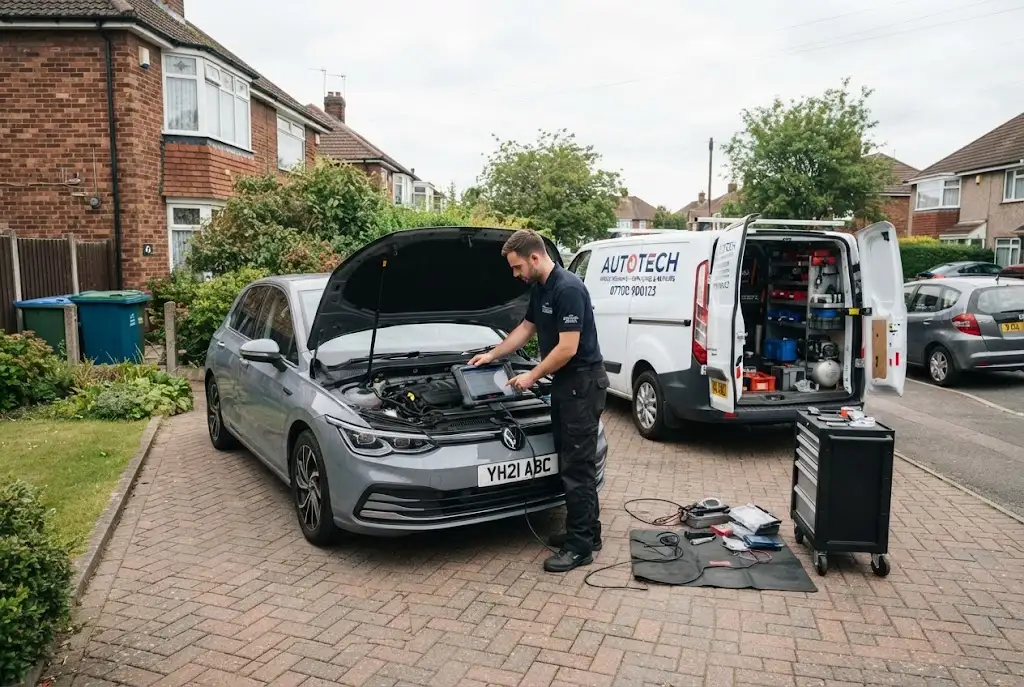
A mobile mechanic normally arrives in a specially equipped vehicle carrying tools, diagnostic equipment and commonly required parts. Depending on the provider and the vehicle fault, services can include routine servicing, diagnostic checks, battery-related work, brake repairs and selected mechanical repairs.
Mobile servicing should not be confused with emergency roadside assistance. Roadside assistance primarily responds when a vehicle has broken down or is experiencing an immediate problem, while mobile servicing can involve planned maintenance and repairs carried out at home or at work.
Mobile Auto Service Trends in the UK
The wider UK aftermarket already includes a significant mobile service component. The Society of Motor Manufacturers and Traders describes the aftermarket as an ecosystem supporting more than 42 million vehicles and tens of thousands of workshops across the UK. Its 2025 aftermarket report also notes the rise of mobile driveway services alongside established roadside assistance providers. SMMT aftermarket information provides further industry context.
Demand for convenience is one of the clearest drivers behind mobile servicing. RAC research published in May 2025 found that 27% of surveyed UK drivers considered getting their vehicle repaired or serviced a hassle. Among those drivers, 68% identified the time required to travel to and from a garage as their biggest complaint.
The same research found that 18% of surveyed drivers who have their vehicles serviced said they do not always get servicing completed on time. Among drivers who did not have their vehicles professionally looked at, 45% cited a lack of money as a reason.
Why Customer Demand for Mobile Mechanics Is Growing
Convenience is central to the mobile mechanic model. Instead of arranging transport to a workshop, a driver can have certain services performed on a driveway or at a workplace.
This can be particularly useful for people with demanding work schedules, families, limited access to alternative transport or vehicles that are difficult to drive because of a fault.
RAC research has provided evidence of this demand. In a 2025 survey, 27% of respondents described servicing and repairs as a hassle, while time spent travelling to and from a garage was the most frequently identified problem among those who found the process inconvenient.
The appeal of mobile servicing therefore goes beyond simply saving a journey. It can reduce the amount of time a vehicle owner has to organise around a repair or service appointment.
Mobile Mechanic Market Activity
One useful indicator of market activity comes from RAC Mobile Mechanics. The company reported that bookings for its mobile mechanics quadrupled in 2024 to nearly 100,000. RAC attributed this growth partly to the inconvenience motorists experience when their vehicles are off the road.
This figure represents activity from one major provider rather than the entire UK mobile mechanic market, so it should not be interpreted as a total market-size estimate. Nevertheless, it illustrates the level of consumer activity that a large mobile servicing network can generate.
RAC has also continued expanding its mobile capability. In September 2026, the company announced that its nationwide fleet had reached 400 RAC Mobile Mechanics and described it as the UK’s largest multi-skilled mobile repair fleet.
What Services Can a Mobile Mechanic Provide?
The services available from a mobile mechanic vary according to equipment, technician qualifications, vehicle type and the nature of the repair. Common examples can include routine servicing, diagnostics, battery replacement and selected brake or suspension work.
RAC data on its mobile mechanics provides an indication of the types of work customers request. In 2024, diagnostic testing accounted for 40% of its mobile mechanics’ routine repair jobs outside full and interim services. Brake work accounted for 18%, while batteries represented 13%, with alternators and starter motors each accounting for 7%.
These figures describe RAC’s own mobile repair activity rather than the entire UK industry. However, they demonstrate that mobile mechanics can handle more than simple roadside breakdown assistance.
Mobile Servicing and Vehicle Downtime
Reducing downtime is one of the strongest arguments for mobile vehicle servicing. A conventional garage visit may require a driver to leave a car at the workshop and arrange another way to continue their journey.
RAC research published in October 2025 found that 39% of surveyed drivers had their main vehicle off the road for at least a day because of unplanned repairs during the previous 12 months. Of those drivers, 68% were without their vehicle for two days or more, while 13% were without it for at least a week.
For people who depend heavily on their vehicles, even a short period without a car can create significant disruption. Mobile repairs can reduce that disruption when the required work can safely and practically be completed at the customer’s location.
Mobile Auto Service and Rural Drivers
Location can have an important influence on the convenience of mobile servicing. Drivers in rural areas may have fewer nearby workshops or may need to travel further to find a garage with the required expertise.
RAC research published in 2025 found that 35% of surveyed drivers who have their vehicles serviced or repaired travelled five or more miles to a garage. Among rural drivers, that proportion rose to 48%.
Mobile services can therefore provide an alternative where travelling to a workshop creates a significant time or transport burden. However, the suitability of mobile servicing still depends on the type of work required and whether the technician has the necessary equipment.
Mobile Auto Service Versus a Traditional Garage
Mobile mechanics and traditional garages serve overlapping but different purposes. The Mobile servicing can be particularly convenient for routine maintenance, diagnostics and repairs that can be completed safely at the customer’s location.
A conventional workshop may be more appropriate when a vehicle needs a lift, extensive dismantling, specialised machinery, major bodywork or repairs that require controlled workshop conditions.
The choice should therefore be based on the job rather than the service model alone. Drivers should consider whether the vehicle is safe to move, what equipment the repair requires and whether the mobile provider is equipped for the particular make and model.
Mobile Auto Service Costs
Mobile service prices vary according to the vehicle, service type, parts, labour requirements and location. A mobile appointment may also involve convenience-related pricing because the technician travels directly to the vehicle.
Current RAC pricing illustrates this variation. Its published data shows an average quoted price of £298.60 for a full service based on mobile mechanic quotes collected between September and November 2025. The company notes that these are indicative quotes rather than actual paid invoices and that costs vary by location, vehicle age, engine size and other factors.
Consumers comparing prices should therefore compare like-for-like services. A quotation should make clear what parts, labour, checks and VAT are included before a decision is made.
Technology and the Mobile Mechanic
Modern vehicles are increasingly dependent on electronic systems, making diagnostic capability important for mobile repair businesses. Technicians may need portable diagnostic scanners and specialist information to identify faults accurately.
Electric and hybrid vehicles are adding another dimension. Mobile mechanics that work on these vehicles may require appropriate training, safety procedures and equipment, particularly when high-voltage systems are involved.
This means the mobile mechanic sector is not simply about transporting conventional garage tools from one location to another. Successful mobile businesses increasingly depend on technical expertise, diagnostic technology and careful assessment of which repairs can be completed safely outside a workshop.
Mobile Auto Service and Roadside Assistance
Mobile servicing overlaps with roadside assistance but the two services have different primary purposes. Roadside assistance typically responds to unexpected breakdowns, attempting to get a vehicle moving again or arranging recovery when an on-the-spot repair is not possible.
Mobile servicing is generally planned in advance. Customers can book a technician for scheduled maintenance or a known repair at a convenient location.
The distinction is becoming less rigid as roadside organisations expand into planned mobile servicing. RAC, for example, describes its mobile mechanics as providing post-breakdown checks, repairs and services as well as its traditional roadside assistance.
Industry Growth and Service Availability
The mobile servicing market is developing alongside the wider automotive aftermarket. As motorists become more conscious of downtime and workshop convenience, service providers have opportunities to expand mobile coverage.
However, growth should not be interpreted as meaning every repair can be completed on a driveway. Large mechanical jobs, specialist equipment requirements and safety considerations can still make a traditional workshop the appropriate choice.
Service availability also depends on geography. A mobile mechanic may cover a defined radius rather than an entire region, so customers should check whether the provider serves their location before booking.
What Mobile Auto Service Trends Mean for Drivers
The available UK evidence points to convenience as a major factor behind mobile servicing demand. Drivers report concerns about travelling to garages, vehicle downtime and the cost of maintenance, while mobile services offer a way to address some of these practical problems.
For motorists, the most important consideration remains the suitability of the service for the required job. A reputable mobile mechanic should be able to explain what can be completed on site, what equipment will be used and whether further workshop work is required.
Drivers should also maintain regular servicing rather than relying on mobile assistance only after a problem appears. Preventative maintenance can help identify developing issues and reduce the likelihood of unexpected disruption.
The Future of Mobile Auto Service in the UK
The UK mobile servicing sector is likely to remain closely connected to broader changes in vehicle ownership and repair. Older vehicles can create demand for mechanical repairs, while newer vehicles increasingly require sophisticated diagnostics and specialist technical knowledge.
Customer expectations are also likely to keep influencing service models. Online booking, transparent quotations, home servicing and workplace appointments all reduce some of the friction associated with conventional garage visits.
At the same time, traditional garages will continue to play an essential role because some repairs require workshop facilities that cannot realistically be carried to a customer’s driveway.
Understanding the Mobile Auto Service Market
Mobile auto service is developing from a niche convenience into an increasingly visible part of the UK’s automotive service landscape. Industry reports highlight the growing role of mobile driveway services, while consumer research points to substantial demand for more convenient servicing and repair options.
The strongest evidence concerns customer inconvenience and provider activity rather than a single nationwide market-size figure. RAC’s reported growth in mobile mechanic bookings and its expanding technician network provide useful examples, while SMMT’s aftermarket data places mobile services within the much larger UK vehicle repair ecosystem.
For readers following the wider automotive data cluster, our coverage of auto repair services statistics examines repair frequency, costs and repair trends. The auto service garage statistics article covers workshops and the UK garage industry, while vehicle maintenance data explores servicing schedules and preventative maintenance. Our auto care services trends article also examines customer preferences and changing maintenance behaviour.