

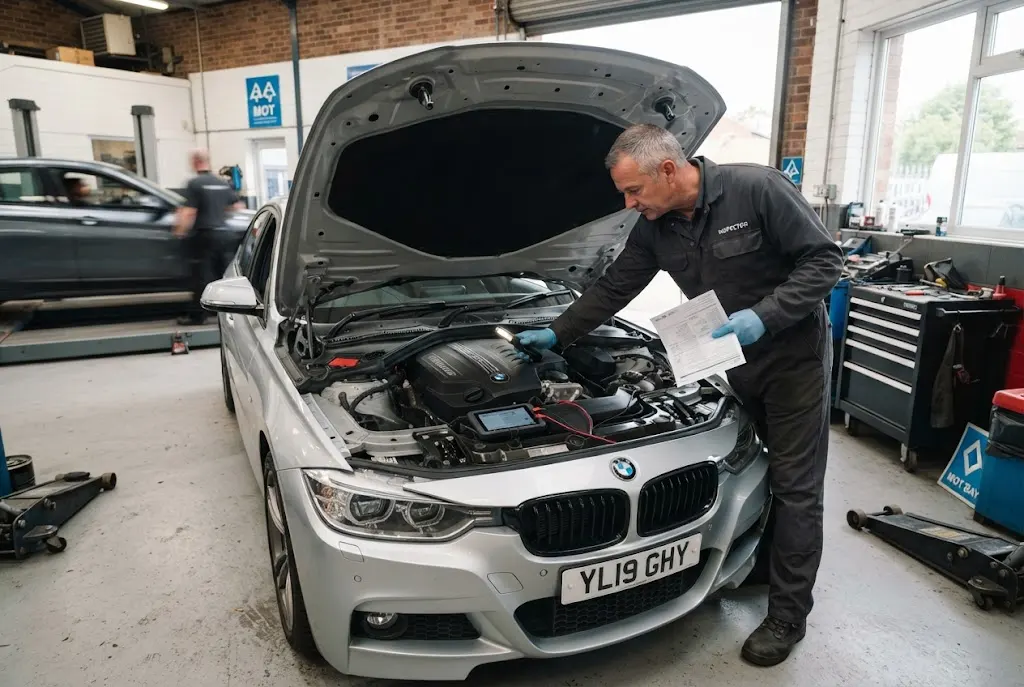
A vehicle inspection can give a buyer a clearer picture of a used car’s condition before committing to a purchase. While an MOT history and service history provide useful information, a physical inspection can reveal current issues that may not appear in official records. For UK buyers, combining a professional inspection with vehicle history checks, documentation and a careful test drive can make the used-car buying process more informed.
A vehicle inspection is not the same as an MOT. An MOT checks whether a vehicle meets specific road safety and environmental standards at the time of the test, whereas a pre-purchase inspection is generally intended to assess the condition of a particular vehicle before purchase. Understanding this distinction is important when evaluating a used car.
What Is a Vehicle Inspection?
A vehicle inspection is a systematic assessment of a vehicle’s condition. Depending on the type of inspection, it may cover the engine, transmission, steering, suspension, brakes, tyres, bodywork, electrical systems, fluids and other components.
The depth of an inspection can vary significantly between providers. Some checks are relatively basic, while more comprehensive assessments may involve a detailed examination of mechanical components and a road test.
For a buyer, the purpose is not necessarily to find a car with absolutely no defects. Used vehicles naturally show some wear according to age, mileage and previous use. Instead, an inspection can help identify significant problems, safety concerns and potential future repair costs.
Why a Pre-Purchase Vehicle Inspection Matters
A pre-purchase inspection can be particularly useful when buying a used vehicle privately or from a seller whose description does not provide enough information about the car’s current condition.
A seller may provide an MOT certificate and service records, but these documents do not necessarily describe every current fault. An inspection can add another layer of evidence by assessing the physical vehicle itself.
This is especially relevant for older or higher-mileage cars. Components such as suspension parts, brakes, tyres, clutches and exhaust systems can wear over time, and their condition may affect the cost of ownership after purchase.
Buyers should also remember that an inspection is a point-in-time assessment. It cannot predict every future mechanical failure, but it can provide useful information about the condition of the vehicle when it is examined.
Vehicle Inspection vs MOT Test
An MOT and a vehicle inspection serve different purposes. The Driver and Vehicle Standards Agency explains that MOT testing checks whether vehicles meet road safety and environmental standards. DVSA publishes testing data by vehicle class and defect category, with datasets updated regularly. :contentReference[oaicite:0]{index=0}
A pre-purchase inspection, on the other hand, is generally commissioned by a buyer or seller to gain a broader understanding of the vehicle’s condition.
For example, an MOT record can show whether a vehicle passed or failed previous tests and what defects were recorded. A physical inspection can then examine the current condition of components that may have changed since the last test.
Neither should automatically replace the other. Used-car buyers can benefit from checking the MOT history while also arranging an independent physical inspection when the purchase represents a significant financial commitment.
What Does a Pre-Purchase Inspection Check?
The exact inspection checklist depends on the provider and vehicle. However, a comprehensive assessment may consider several major areas.
Engine and Mechanical Components
An inspector may look for visible leaks, unusual noises, fluid issues and other signs that could indicate mechanical problems. The engine bay may also be checked for obvious signs of neglect or previous repairs.
A road test can provide additional information about starting, acceleration, braking, gear changes, steering and unusual sounds. However, the scope of the road test depends on the inspection service and the circumstances.
Brakes, Steering and Suspension
Brakes, steering and suspension are important safety-related systems. An inspection may look for excessive wear, damaged components, leaks, unusual movement or other visible concerns.
These systems can also influence the way a vehicle feels during a test drive. Pulling to one side, excessive vibration, unusual noises or inconsistent braking may justify further investigation.
Tyres and Wheels
Tyres should be checked for tread, pressure, visible damage and uneven wear. Uneven tyre wear can sometimes provide clues about alignment or suspension issues.
Because tyres are a safety-critical part of a vehicle, buyers should not treat worn tyres as a minor cosmetic issue. Understanding tyre services can also help buyers estimate the likely cost of fitting, replacement, repairs and balancing when evaluating a used vehicle.
Bodywork and Structure
Bodywork checks can identify dents, scratches, corrosion, mismatched paint and signs of previous repairs. In some circumstances, differences in paint finish or panel alignment may warrant further investigation.
For a used-car buyer, evidence of previous accident damage is particularly important. A professional inspection may identify visible signs that a casual walk-around could miss, although no inspection should be presented as a guarantee that a vehicle has never been damaged.
Why Inspection Reports Matter
Inspection reports turn the physical assessment into a written record that the buyer can review. The format varies, but a report may identify components that require attention, describe their condition and distinguish between urgent and less significant issues.
A good report can help a buyer make a more informed decision instead of relying entirely on a seller’s description.
If several issues are identified, the report can also help the buyer estimate potential ownership costs. For example, tyres may be acceptable today but approaching replacement, while brakes or suspension components may require attention in the future.
Reports should be read carefully rather than focusing only on a simple pass or fail-style summary. A used vehicle can have minor defects without being an unsuitable purchase, while a single expensive mechanical issue can materially change the financial calculation.
Service History and Vehicle Inspection
Service history provides important context for a physical inspection. Regular servicing can show that recommended maintenance has been carried out, while gaps in documentation may require additional questions.
However, a complete service history does not guarantee that a vehicle is currently fault-free. A car can develop problems between service intervals, and previous maintenance does not eliminate normal wear.
Buyers should therefore consider the service history alongside the inspection report, MOT history, mileage and general condition.
GOV.UK recommends that buyers check information such as the vehicle’s registration details, MOT status and history, recalls and documentation before purchasing a used vehicle. :contentReference[oaicite:1]{index=1}
Vehicle History Checks Add Another Layer of Protection
A vehicle history check can provide information that is not immediately visible during a physical inspection. Depending on the service used, buyers may be able to investigate recorded mileage, insurance-related information, outstanding finance or other historical data.
Official checks should always form part of the buying process. GOV.UK specifically advises prospective buyers to obtain the registration number, make, model and MOT test number and compare the information with official records. :contentReference[oaicite:2]{index=2}
Checking the vehicle identification number and the V5C registration certificate is also important. Buyers should make sure the details they are given correspond with the vehicle and its documentation.
Vehicle Inspection Statistics and UK Safety Data
Government testing data provides useful context for understanding why vehicle condition matters. The DVSA publishes MOT results and defect-category data for different vehicle classes, including cars and light vans. These datasets are updated periodically and show patterns in failures and recorded defects. :contentReference[oaicite:3]{index=3}
For example, the DVSA’s 2025 to 2026 Quarter 1 data for class 3 and 4 vehicles lists brakes, lamps, reflectors and electrical equipment, suspension, tyres and other areas among recorded defect categories. The figures are based on MOT tests and should not be interpreted as a direct measure of the condition of every vehicle on UK roads. :contentReference[oaicite:4]{index=4}
Government vehicle enforcement data offers another perspective. During April to June 2025, “Condition of Tyres” accounted for 32.94% of the listed prohibition-defect measure for cars inspected at the roadside in the DVSA dataset. This is an enforcement statistic rather than a population-wide safety rate, but it demonstrates why tyre condition can receive attention during professional vehicle checks. :contentReference[oaicite:5]{index=5}
These statistics support the broader value of inspecting safety-related components rather than focusing solely on a vehicle’s exterior appearance or advertised mileage.
Inspection Benchmarks: What Should Buyers Look For?
There is no single inspection benchmark that makes every used vehicle a good or bad purchase. The appropriate standard depends on the vehicle’s age, mileage, price, intended use and maintenance history.
A five-year-old car with moderate mileage would normally be assessed differently from a fifteen-year-old vehicle with substantially higher mileage. Some wear may be expected on an older car, but buyers still need to understand whether the cost of correcting that wear is reasonable.
Instead of asking whether a vehicle is “perfect”, buyers can consider several practical questions:
- Are there any immediate safety concerns?
- Which components require attention now?
- Which items may require replacement soon?
- Are there signs of previous accident damage?
- Does the condition match the advertised mileage and service history?
- Could identified repairs materially affect the purchase price?
- Is the overall condition consistent with the vehicle’s age and asking price?
This approach makes an inspection more useful as a buying decision tool.
Can a Vehicle Inspection Help With Negotiation?
Yes, inspection findings can provide evidence for a price discussion. If an independent assessment identifies worn tyres, brake work, suspension repairs or other issues, a buyer can use the expected cost as part of the negotiation.
The strongest approach is to remain factual. Instead of simply demanding a discount because an inspection found defects, the buyer can explain which repairs are required and why they affect the vehicle’s immediate ownership cost.
However, not every defect justifies a large price reduction. Minor cosmetic issues or normal wear may already be reflected in the asking price. The buyer should consider the overall condition rather than treating every inspection finding as a reason to walk away.
When Should You Arrange a Vehicle Inspection?
An inspection is particularly worth considering when buying a relatively expensive used vehicle, purchasing privately, buying an older or high-mileage car, or when the vehicle’s history is incomplete.
It may also be useful when the seller is located far away and the buyer wants independent information before travelling or completing a purchase.
For lower-value vehicles, buyers may decide that the inspection cost is disproportionate to the purchase price. Even then, official history checks, a careful visual examination and a thorough test drive remain valuable.
How Much Should Buyers Rely on an Inspection?
A professional inspection should be treated as one source of evidence rather than an absolute guarantee. Mechanical systems can fail unexpectedly, and some problems may not be detectable during a limited inspection.
Buyers should combine the inspection with official MOT records, service documentation, vehicle history checks and their own assessment of the car.
It is also sensible to ask the inspector what is and is not included. Understanding the scope of the inspection helps prevent unrealistic expectations about what the report can establish.
Vehicle Inspection and Future Repair Costs
One of the most useful benefits of an inspection is that it can improve awareness of potential future expenses. A vehicle with several components approaching the end of their useful service life may require a larger maintenance budget than another car in better condition.
This matters because the purchase price is only one part of the total ownership cost. Insurance, fuel, servicing, tyres, repairs and finance can all affect the long-term affordability of a vehicle.
If an inspection identifies substantial repairs, buyers can also consider how those expenses would fit into their budget. Understanding repair finance may be useful when assessing how unexpected repair costs could be managed, although financing should always be compared with paying from savings and other available options.
Final Thoughts on Vehicle Inspection
A vehicle inspection can give UK used-car buyers valuable information that an advert, MOT certificate or service history cannot provide on its own. By examining mechanical systems, tyres, brakes, suspension, bodywork and other components, an inspection can help reveal the vehicle’s current condition and potential repair needs.
The best buying decisions combine several sources of evidence. Check the official MOT history, review the service history, verify vehicle details and recalls, inspect the car carefully and consider an independent assessment when the purchase warrants the additional cost.
Government testing and enforcement data also shows why vehicle condition deserves attention. A vehicle inspection does not guarantee a trouble-free ownership experience, but it can reduce uncertainty and help buyers understand what they are actually purchasing.
