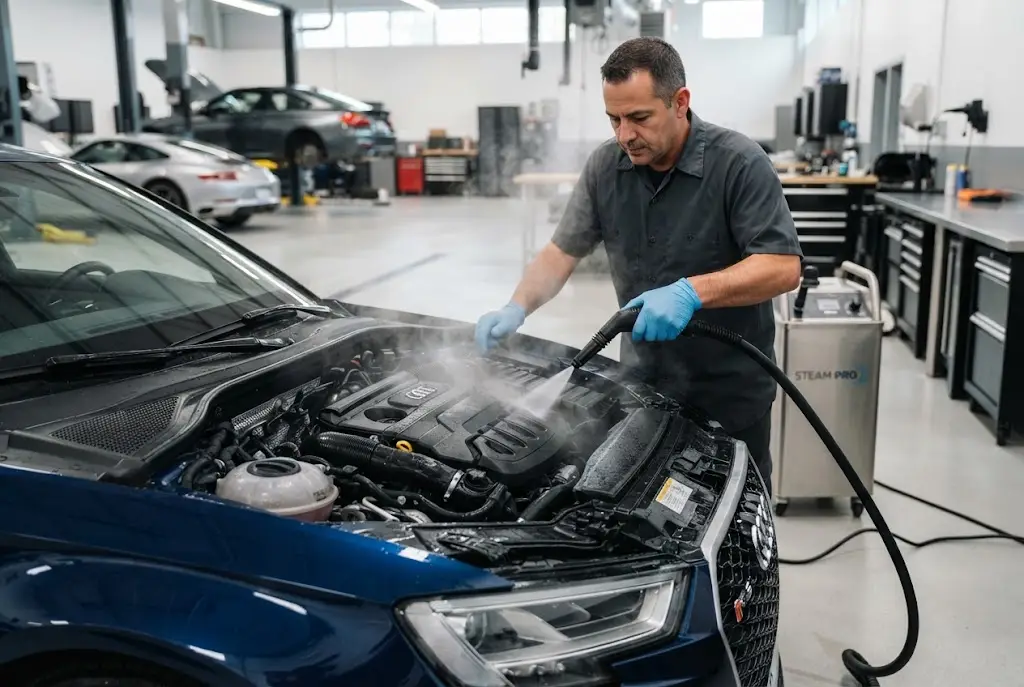
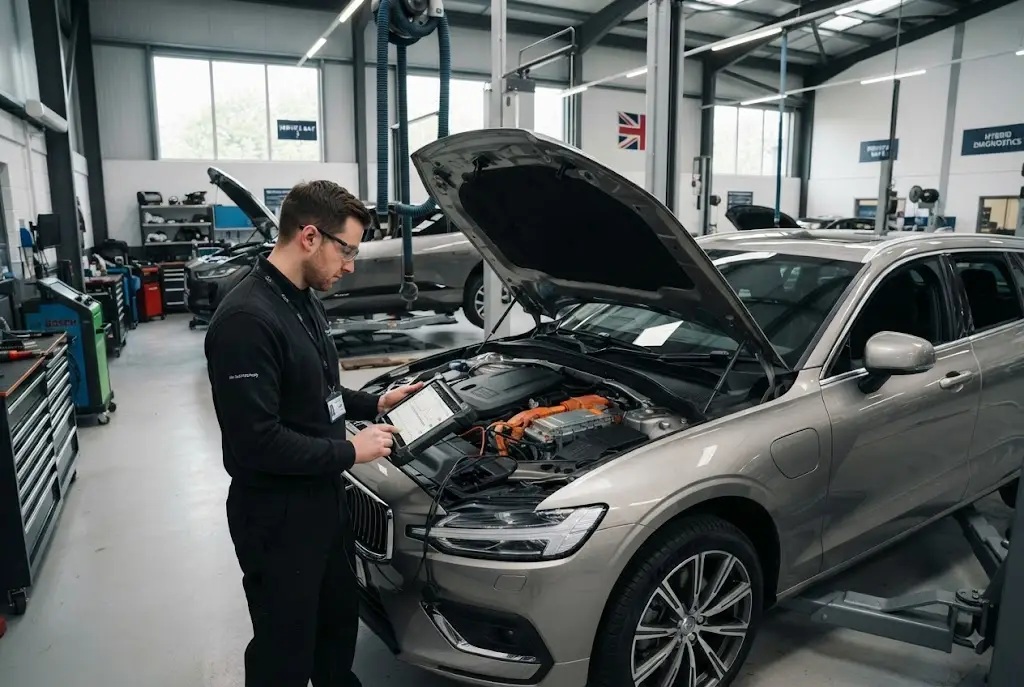
Hybrid servicing is becoming an increasingly important part of the UK automotive aftermarket as more motorists choose vehicles that combine an internal combustion engine with electric drive technology. Hybrid cars can have different maintenance requirements from conventional petrol or diesel vehicles, although many routine servicing tasks remain familiar to experienced technicians.
A hybrid powertrain typically combines an engine with one or more electric motors, a traction battery and electronic control systems. Depending on the vehicle, the system can recover energy during braking, use electric power at lower speeds and automatically switch between different power sources. These technologies can influence fuel consumption, brake wear and the type of diagnostic equipment required during servicing.
This guide explains the key facts about hybrid servicing, including routine maintenance, Toyota hybrid service requirements, battery technology, efficiency, specialist skills and what owners should know when maintaining a hybrid vehicle in the UK.
What Does Hybrid Servicing Involve?
Hybrid servicing combines many familiar vehicle maintenance tasks with checks specific to the hybrid system. The exact schedule varies according to the manufacturer, model, age and mileage of the vehicle.
Routine servicing can include inspection or replacement of engine oil and filters, checking brakes, tyres, suspension, steering components, fluids and other conventional vehicle systems. Hybrid-specific checks may include the traction battery, high-voltage components, electrical connections, cooling systems and electronic control systems.
The precise requirements should always be taken from the vehicle manufacturer’s service schedule. A hybrid is still a complex motor vehicle, so skipping routine maintenance simply because part of its propulsion system is electric is not advisable.
Why Hybrid Servicing Is Different
Hybrid vehicles have two interacting power sources rather than relying solely on an internal combustion engine. That creates additional components that technicians may need to inspect and diagnose.
A typical hybrid system can contain:
- A petrol or, in some designs, diesel engine.
- One or more electric motors or motor-generators.
- A high-voltage traction battery.
- Power electronics and an inverter.
- Electronic control units.
- Regenerative braking components.
- Cooling systems for the engine and hybrid components.
Because these systems operate together, a fault may not always resemble a traditional mechanical problem. Diagnostic equipment and manufacturer-specific technical information can therefore be important when identifying faults.
Toyota Hybrid Service: What Owners Should Know
Toyota hybrid service is a useful example of how a manufacturer can structure maintenance for hybrid vehicles. Also Toyota UK states that its hybrids should generally be serviced every 12 months or 10,000 miles, whichever comes first, although individual vehicle schedules can differ.
Toyota also states that its Hybrid Service includes checks of the hybrid system and hybrid battery. An annual qualifying service can make an eligible Toyota hybrid battery eligible for additional Hybrid Battery Extended Cover, subject to the applicable terms and conditions. Toyota currently states that this cover can extend up to a total of 15 years. Toyota UK hybrid information
This demonstrates why owners should check the specific manufacturer’s requirements rather than assuming that every hybrid follows exactly the same servicing schedule.
Hybrid Maintenance Still Includes Conventional Car Checks
One common misconception is that hybrid vehicles require entirely different maintenance from conventional cars. In reality, a significant proportion of the vehicle still consists of familiar mechanical systems.
Depending on the model, technicians may still need to inspect:
- Engine oil and filters.
- Brake components.
- Tyres and wheel condition.
- Suspension components.
- Steering systems.
- Coolant and other fluids.
- Air conditioning systems.
- Windscreen wipers and lighting.
- 12-volt battery condition.
The difference is that these checks are performed alongside inspection of the vehicle’s electrified powertrain.
Regenerative Braking Can Affect Brake Wear
One of the interesting aspects of hybrid maintenance is regenerative braking. Instead of relying exclusively on conventional friction brakes to slow the vehicle, the electric motor can help recover kinetic energy and convert it into electrical energy stored in the traction battery.
This can reduce the amount of work performed by conventional brake components during certain driving conditions. Toyota specifically notes that components such as brake pads can experience less wear in its hybrid vehicles. Toyota’s hybrid technology information
However, reduced brake wear does not mean the braking system can be ignored. Brake discs, pads, callipers, fluid and associated components still require inspection. A vehicle that uses regenerative braking extensively can also experience different patterns of brake use compared with a conventional car.
Hybrid Battery Technology Is Central to Maintenance
The traction battery is one of the most important components in a hybrid powertrain. It stores electrical energy and supplies power to the electric motor or motors when required.
Hybrid battery technology varies between manufacturers and models. Battery chemistry, capacity, cooling arrangements, control systems and packaging can all differ. Consequently, there is no single maintenance rule or universal battery replacement interval that applies to every hybrid vehicle.
Battery health is generally assessed through the vehicle’s diagnostic systems and, where applicable, dedicated battery testing procedures. Toyota’s published Battery Care terms describe a Battery Health Check carried out by trained technicians using a dedicated application to assess aspects of the traction battery system. Toyota Battery Care terms
How Long Do Hybrid Batteries Last?
Battery lifespan is one of the most common concerns among hybrid owners and used-car buyers. However, giving one universal number of years or miles would be misleading because battery durability depends on the vehicle, battery design, operating conditions, maintenance and other factors.
Manufacturer warranty policies can provide a more useful indication of how individual brands approach battery longevity. For example, Toyota UK states that eligible Toyota hybrids can receive additional battery cover following qualifying hybrid services, potentially extending coverage to 15 years under its current programme. Toyota UK warranty information
This is not the same as saying every hybrid battery will last 15 years. Warranty or extended-cover periods should not be confused with a guaranteed component lifespan.
Hybrid Efficiency and Servicing
Hybrid efficiency is influenced by the interaction between the engine, electric motor, battery and vehicle control software. Driving conditions also matter considerably.
Hybrids can be particularly effective in situations involving frequent acceleration, deceleration and lower-speed driving because the system can recover energy through regenerative braking and use electric assistance where appropriate.
However, efficiency depends on many variables, including vehicle design, weather, driving style, traffic, road conditions, load and speed. A well-maintained hybrid can operate as designed, but servicing alone cannot guarantee a particular fuel-economy figure.
Regular maintenance can nevertheless help identify issues that may affect vehicle performance. Correct tyre pressures, appropriate fluids, healthy brakes and functioning engine and electrical systems all contribute to the vehicle operating as intended.
Do Hybrid Cars Need More Specialist Mechanics?
Hybrid services can require additional technical knowledge because high-voltage electrical systems introduce hazards and procedures that do not apply to conventional petrol or diesel vehicles in the same way.
Technicians working on high-voltage systems may need appropriate training, insulated equipment, safety procedures and diagnostic tools. Garages should have the correct capabilities for the particular vehicle before undertaking work on its hybrid system.
This is especially important when repairs involve the traction battery, inverter, high-voltage cables, electric motor or other components of the high-voltage system.
Routine work such as tyres, wheel alignment and some conventional mechanical maintenance may not require direct intervention with the high-voltage system. However, technicians still need to understand the vehicle and follow appropriate safety procedures.
Hybrid Servicing and MOT Testing
Hybrid vehicles are subject to the UK’s MOT requirements in the same broad way as other passenger cars. Toyota UK notes that vehicles in Great Britain generally require an MOT from three years after registration, while vehicles in Northern Ireland follow different rules.
An MOT is not a substitute for a manufacturer’s scheduled service. The MOT checks whether the vehicle meets the relevant legal roadworthiness and environmental requirements at the time of the test, while servicing is designed to maintain the vehicle according to its manufacturer’s maintenance programme.
Owners should therefore treat MOT testing and hybrid servicing as separate but complementary aspects of vehicle ownership.
Used Hybrid Ownership and Service History
A documented service history can be particularly useful when buying a used hybrid. Buyers may want to establish whether routine maintenance was completed according to the manufacturer’s recommendations and whether relevant hybrid-system checks were performed.
Service records can also provide evidence of how the vehicle has been maintained over time. For Toyota vehicles, service history can be accessed through the MyToyota app or through the manufacturer’s dealer network, according to Toyota UK. Toyota UK servicing information
When considering a used hybrid, buyers should also check the exact battery warranty or coverage terms applicable to that vehicle. These can vary according to model, registration date, service history and the manufacturer’s current conditions.
How Hybrid Servicing Costs Can Differ
The cost of maintaining a hybrid varies according to the model, service level, garage and work required. It is not accurate to assume that every hybrid is either cheaper or more expensive to maintain than a conventional vehicle.
Some hybrid components can reduce certain wear-related costs. Regenerative braking, for example, can reduce reliance on conventional braking in appropriate driving conditions. On the other hand, hybrid vehicles contain additional electrical and electronic components that can require specialist diagnostic procedures.
Toyota UK says its hybrid vehicles are designed to have service costs comparable with conventional vehicles in its range and highlights reduced brake-pad wear as one factor. Toyota UK hybrid ownership information
Actual costs should always be checked against the specific vehicle and service schedule rather than relying on a general hybrid-versus-petrol comparison.
Hybrid Servicing as the UK Vehicle Fleet Changes
The growth of electrified vehicles is changing the skills required across the automotive aftermarket. Hybrid vehicles occupy an important position in this transition because they combine conventional mechanical systems with electric propulsion.
That combination means garages increasingly need technicians who understand both traditional vehicle maintenance and high-voltage electrical systems. Diagnostic technology, battery health testing and safety procedures are becoming increasingly relevant to workshops that want to support a broader range of vehicles.
The trend also connects hybrid maintenance with the wider development of EV servicing. Although hybrids and battery-electric vehicles are not identical, both require technicians to understand electrified powertrains and modern vehicle electronics.
What Hybrid Owners Should Check Between Services
Scheduled servicing is important, but owners should also pay attention to changes in how their vehicle behaves between appointments.
Warning lights, unusual noises, changes in braking behaviour, unexpected fuel consumption changes or messages relating to the hybrid system should not be ignored. If a high-voltage warning appears, owners should follow the manufacturer’s instructions and seek appropriate professional assistance rather than attempting to access high-voltage components themselves.
Simple checks such as tyre condition, tyre pressures, fluid levels where appropriate and general vehicle condition can also help owners identify problems early.
The Future of Hybrid Services
Hybrid vehicles are likely to remain an important part of the UK’s vehicle parc for years to come. As these cars move into the used market and accumulate higher mileages, demand for qualified hybrid servicing will continue to matter to both motorists and automotive businesses.
Workshops that understand hybrid systems can serve customers who need routine servicing as well as more specialised diagnostics. Meanwhile, vehicle owners can benefit from choosing garages with suitable training, equipment and experience for their particular hybrid model.
The most important point is that hybrid maintenance should be approached according to the vehicle’s actual design. There is no single hybrid service formula. Manufacturer schedules, battery technology, vehicle age, mileage and operating conditions all influence what work is appropriate.
Final Thoughts
Hybrid servicing combines conventional vehicle maintenance with checks and procedures designed for electrified powertrains. Routine servicing remains important for engines, brakes, tyres, suspension and other mechanical components, while hybrid-specific work can involve battery health, electrical systems, diagnostics and high-voltage safety.
Toyota provides a useful example of manufacturer-supported hybrid maintenance, recommending regular servicing and offering battery-related cover subject to its eligibility requirements. However, owners of other hybrid brands should always follow their own manufacturer’s service schedule and warranty conditions.
As hybrid ownership develops across the UK, understanding battery technology, maintenance requirements and technician skills will become increasingly useful. For motorists, keeping a complete service history and using appropriately qualified professionals can help support reliable long-term ownership.