A vehicle servicing timeline provides a practical way to understand how vehicle maintenance develops from one stage of ownership to the next. Rather than treating every service as an isolated appointment, drivers can use a timeline to keep track of routine servicing, inspections, wear-related maintenance and important records. This makes it easier to plan ahead and recognise when a vehicle may require professional attention.
There is no universal maintenance schedule that applies to every car. Service intervals depend on the manufacturer’s recommendations, vehicle design, mileage, age and how the vehicle is used. However, understanding the general chronology of vehicle ownership can help drivers organise maintenance more effectively.
What Is a Vehicle Servicing Timeline?
A vehicle servicing timeline is a chronological record or plan showing when important servicing and maintenance events take place during a vehicle’s ownership lifecycle. It can include scheduled services, inspections, repairs, component replacements and other significant maintenance milestones.
The timeline can begin when a vehicle is purchased and continue throughout its useful life. For a used vehicle, the existing service history can provide the starting point. For a new vehicle, the manufacturer’s recommended schedule can form the initial framework.
The purpose is not to replace the manufacturer’s maintenance instructions. Instead, it gives the owner a practical system for understanding and recording what has happened and what may be due next.
Why a Vehicle Servicing Timeline Matters
Vehicle maintenance becomes easier to manage when owners know what has already been done. Without reliable records, it can be difficult to remember when oil was changed, when major components were inspected or whether a previous owner completed recommended work.
A structured timeline can reduce this uncertainty. It can also help distinguish routine servicing from unexpected repairs and safety-related inspections.
For example, an owner may record a scheduled service separately from a later brake repair. Both are part of the vehicle’s maintenance history, but they represent different reasons for spending money on the car.
This information becomes especially useful when reviewing car service costs over several years.
Starting the Timeline When Buying a Vehicle
The first stage of a vehicle servicing timeline is establishing the vehicle’s current condition and maintenance history. For a new car, this may be relatively straightforward because the service requirements are documented from the beginning.
A used vehicle requires more investigation. Owners should review available service records, previous invoices and relevant vehicle history before deciding what maintenance should be planned next.
If the existing history is incomplete, a professional inspection may provide additional information about the vehicle’s current condition. A detailed vehicle inspection can help identify areas that may require attention even when previous records are limited.
The First Maintenance Milestones
Once ownership begins, the first milestones are normally based on the vehicle manufacturer’s service schedule. These requirements can be expressed in terms of time, mileage or both.
Some vehicles may have different maintenance requirements depending on how they are driven. Heavy use, frequent short journeys or demanding operating conditions can affect how maintenance should be approached.
Rather than relying on a generic online rule, owners should use the documentation appropriate to their particular vehicle. Recording each completed service then creates a clear chronology for future reference.
Understanding Service Intervals
Service intervals are the recommended periods between scheduled maintenance events. They can differ considerably between vehicles, so there is no single interval that every UK driver should follow.
The relevant schedule may specify a mileage threshold, a period of time or a combination of the two. Some modern vehicles can also provide maintenance reminders through onboard systems.
Drivers should avoid assuming that an electronic reminder or annual MOT automatically replaces the manufacturer’s service schedule. These are different parts of vehicle ownership.
An MOT checks specific legal and safety requirements. Routine servicing has a broader maintenance purpose and follows the requirements appropriate to the vehicle.
Maintenance Milestones During Regular Ownership
As the vehicle moves through its ownership lifecycle, the timeline can include regular services alongside other maintenance events. These may include brake inspections, tyre replacement, battery work, fluid-related maintenance or repairs resulting from normal wear.
Not every milestone occurs at a predictable point. Wear depends on vehicle use and condition, meaning some components may require attention earlier or later than an owner expects.
This is why a timeline should be treated as a living record rather than a rigid prediction of every future repair.
Regular auto care services can help identify maintenance requirements as they arise and keep the overall record up to date.
How Inspections Fit Into the Timeline
Professional inspections can play an important role alongside scheduled servicing. An inspection may be appropriate when a vehicle develops an unusual noise, warning light, vibration or change in handling.
It can also be useful before buying a used vehicle, after an accident or before undertaking a particularly long journey.
The important point is that an inspection does not necessarily mean the vehicle is due for its routine service. It may instead be triggered by a specific concern.
Recording inspection findings within the timeline can help owners understand when an issue first appeared and what action was taken afterwards.
MOT Dates and Servicing Chronology
For many UK vehicles, MOT history forms another useful part of the ownership record. However, MOT dates should not be confused with service intervals.
The MOT is a regulated test with defined inspection requirements. Passing an MOT does not mean that a vehicle will not need routine servicing or other maintenance before the next test.
Keeping MOT information alongside service invoices and inspection reports creates a more complete ownership chronology. Drivers can then see how regulatory testing, routine servicing and unexpected repairs fit together.
Official information from GOV.UK’s MOT guidance explains what the MOT test covers and why it should not be treated as a complete mechanical assessment.
Mobile Servicing Within the Ownership Lifecycle
Not every maintenance milestone requires a visit to a traditional workshop. Some suitable services can be completed at the customer’s home or workplace by a mobile technician.
A mobile auto service can be useful for selected maintenance tasks, diagnostics and repairs. This can make routine vehicle care more convenient when travelling to a workshop would be disruptive.
However, mobile servicing has practical limitations. Some repairs require workshop equipment, specialist machinery or a controlled environment. The timeline should therefore record the work completed rather than assuming that every maintenance task can be handled in the same way.
Mid-Life Maintenance Milestones
As a vehicle accumulates mileage and years of use, its maintenance history becomes increasingly valuable. Wear-related components may require replacement, while older systems may need closer inspection.
This stage is also when owners may begin comparing repair expenditure with the vehicle’s current value and expected future use.
There is no universal point at which a car becomes too expensive to maintain. The decision depends on the vehicle’s condition, reliability, repair requirements and the owner’s circumstances.
Tracking previous maintenance expenses can make this decision more informed because owners can see how spending has changed over time.
Vehicle Lifespan and Long-Term Maintenance
Vehicle lifespan is influenced by design, maintenance, mileage, driving conditions and the quality and timing of repairs. Two vehicles of the same age can therefore have very different maintenance histories.
A long-term timeline helps reveal this difference. One car may show consistent servicing and documented repairs, while another may have gaps in its history or repeated unresolved problems.
For owners who intend to keep a vehicle for many years, maintaining an accurate record can make future planning easier. It also provides useful evidence when discussing repairs with technicians.
What to Record in a Servicing Timeline
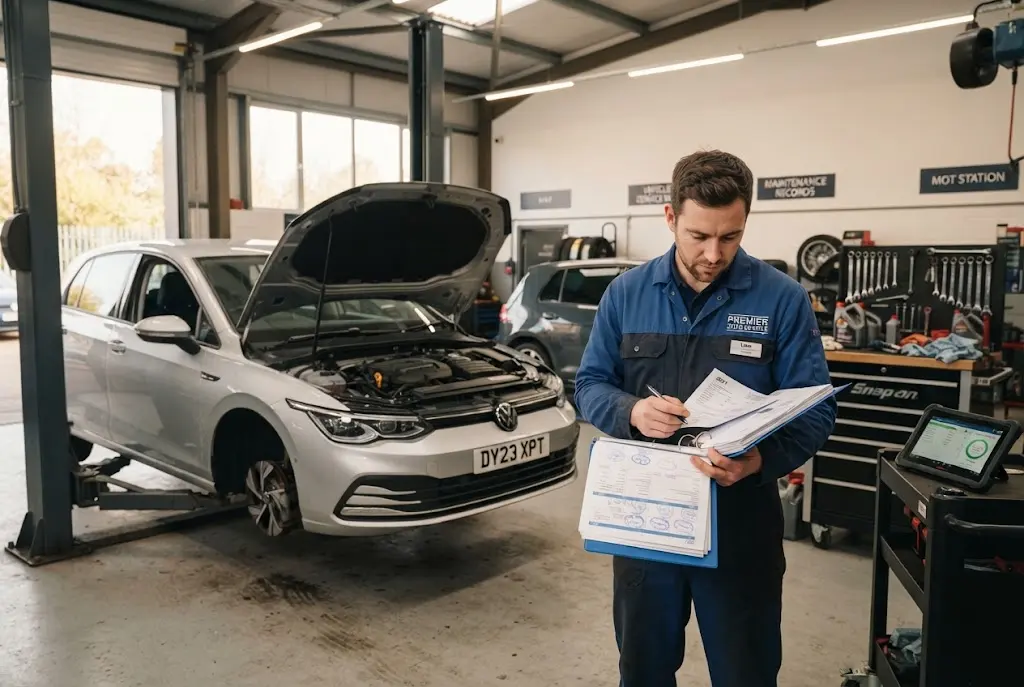
A useful timeline does not need to be complicated. The owner can record the date, mileage, type of work and any important findings associated with each maintenance event.
Useful records can include:
- Scheduled service dates and mileage.
- Routine maintenance performed.
- Inspection dates and significant findings.
- MOT dates and outcomes.
- Brake and tyre work.
- Battery replacement or electrical repairs.
- Diagnostic investigations.
- Major component replacements.
- Unexpected repairs and associated invoices.
- Recommendations for future maintenance.
Keeping these details together makes the vehicle’s history easier to understand and reduces the chance of repeating maintenance unnecessarily.
Creating a Practical Maintenance Schedule
A practical maintenance schedule should begin with the manufacturer’s recommendations. Owners can then add relevant events as they occur.
For example, a scheduled service can be entered as a planned milestone. If the technician identifies a worn component during that service, the recommended repair can be added as a separate maintenance event.
This approach creates a distinction between what was planned and what was discovered. Over time, that distinction provides a much clearer picture of vehicle ownership.
It is also useful to keep digital or physical copies of invoices and inspection reports. If a question arises later, the owner can return to the original documentation instead of relying on memory.
How a Timeline Helps With Selling a Vehicle
A complete maintenance history can become particularly valuable when a vehicle is sold. Potential buyers often want to understand how the vehicle has been maintained, especially when considering an older or higher-mileage car.
A well-organised record can show when servicing occurred, what major repairs were completed and whether important maintenance milestones were documented.
It does not guarantee that a vehicle is free from faults, but it provides useful context for evaluating its history and current condition.
Planning Future Servicing
The main benefit of a vehicle servicing timeline is that it turns past maintenance information into a planning tool. Once previous services, inspections and repairs have been recorded, owners can identify upcoming scheduled requirements more easily.
Future planning should still be based on the vehicle manufacturer’s recommendations and its actual condition. A timeline is a support tool, not a substitute for professional advice when a fault develops.
Drivers can also use the timeline to prepare financially for predictable maintenance while keeping some allowance for unexpected repairs.
Vehicle Servicing Timeline for Older Cars
Older vehicles can benefit particularly from detailed maintenance records. As more components experience wear, the history provides useful context for deciding what should be repaired, monitored or replaced.
When several repairs are required at once, owners can use the timeline to review previous expenditure and determine whether the vehicle remains practical to maintain.
This is also where a combination of professional inspections, documented servicing and realistic cost analysis can support better decisions.
Final Thoughts on Vehicle Servicing Timelines
A vehicle servicing timeline provides a simple framework for understanding vehicle maintenance from purchase through the later stages of ownership. It connects scheduled services with inspections, repairs, MOT information and other important maintenance milestones.
The most effective timeline is based on the individual vehicle rather than a generic schedule. Manufacturer recommendations should remain the foundation, while mileage, age, usage and actual vehicle condition provide additional context.
By keeping accurate records and planning future maintenance, drivers can make vehicle ownership more organised and predictable. A timeline can also make it easier to understand long-term spending, communicate with technicians and demonstrate how a vehicle has been maintained.
For a complete view of the wider topic, explore our related guides on auto care services, auto inspection services, mobile auto service and car service cost.